During the spring of 2025, the Trump Administration launched what amounts to a fundamental change in US trade policy. The government announced sweeping tariff increases on imports from China, Europe, Mexico, and many other trading partners.
The scale of the measures initially stunned observers.1 Double-digit duties on a range of manufactured products suggested a sharp departure from the post-war tradition of open trade. Several factors appear to have played a role. The Administration has presented the policy as an effort to rebalance trade and make it fairer. It has also highlighted the revenue generated by the tariffs, which provides a source of funding at a time when the federal deficit remains large. Finally, the measures are intended to encourage domestic production and reduce dependence on foreign suppliers, particularly in strategic sectors such as semiconductors, automobiles, and green technologies.
Yet the picture soon proved more complicated than the initial announcements suggested. Negotiations with trading partners led to a series of exemptions, phased introductions, delayed implementation dates, and reductions in tariff rates. The result is that the tariff schedule on paper looks far more restrictive than the one currently applied in practice.
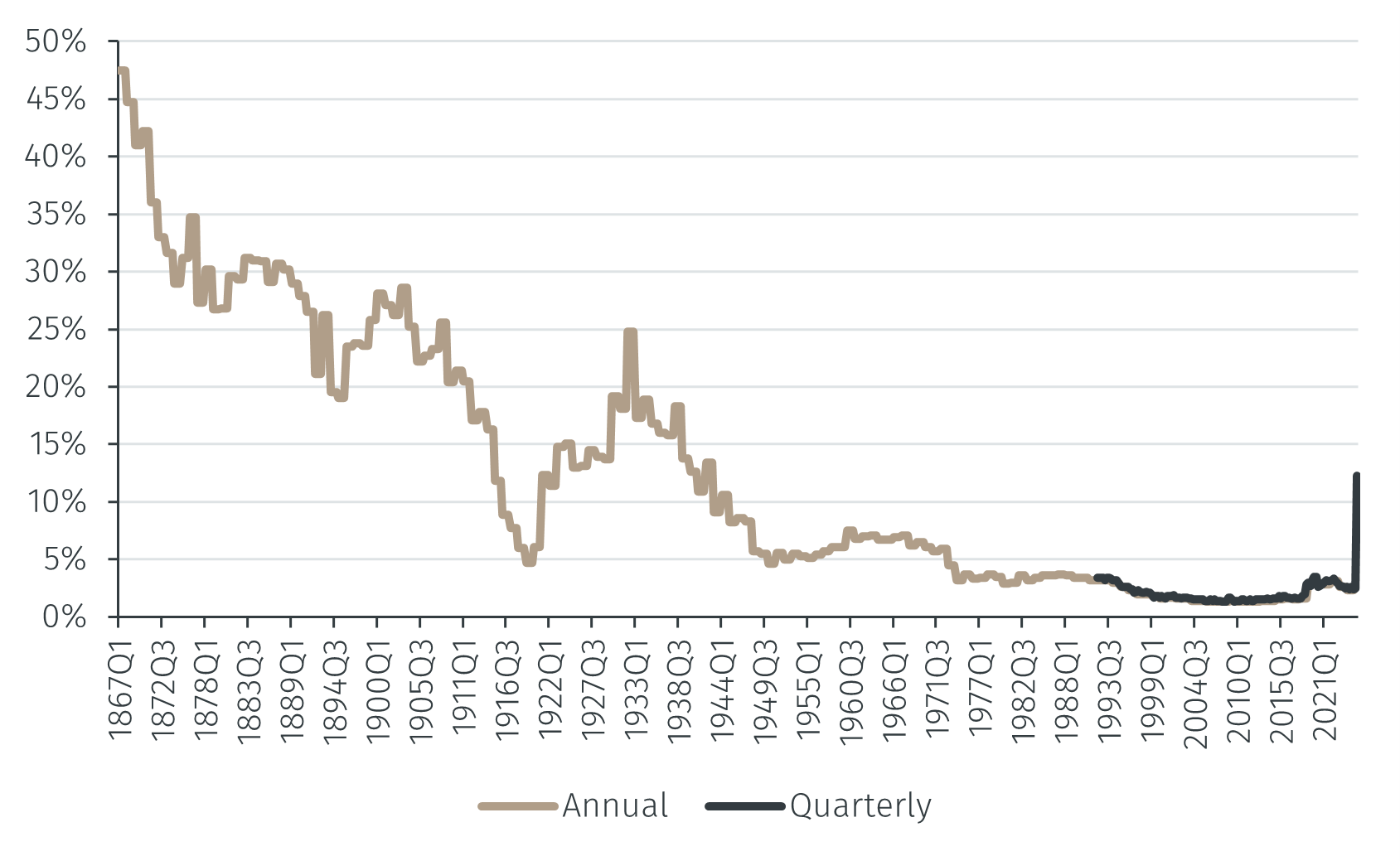
This gap between announced and actual tariffs raises an obvious question: how high are US tariffs in reality? One way to answer that is to look not at the legal tariff rates themselves but at the ratio of total customs revenue to the value of total goods imports, which provides a straightforward measure of what importers actually pay.
This effective tariff rate automatically incorporates the actual rates applied and also reflects changes in the composition of imports - if duties are concentrated on goods that are no longer imported, the effective rate will fall even when statutory rates rise. Because it captures both policy and behaviour, the effective rate gives a more accurate picture of the burden tariffs place on trade and prices than the official schedules alone.