What Pythagoras’ theorem can teach us about the Fed

All Insights

Currently reading

Reserve Bank of Australia: A rate cut now looks likely

Investment Insights • Macro

2 min read

Reserve Bank of Australia: A rate cut now looks likely

At its July meeting, the Reserve Bank of Australia (RBA) surprised markets by leaving interest rates unchanged, despite recent signs of easing inflation. In this Macro Flash Note, EFG Chief Economist Stefan Gerlach examines recent inflation developments and the broader economic backdrop and considers what they mean for the RBA’s upcoming policy decision in August.

At its July meeting, the Reserve Bank of Australia (RBA) surprised financial markets by leaving interest rates unchanged. This decision has turned attention to the next meeting of the Monetary Policy Board, scheduled for 11–12 August.

The pattern of inflation and monetary policy in Australia has broadly mirrored that in other advanced economies. Inflation pressures eased in the early months of the pandemic in 2020. From 2021, inflation began to rise, peaking in late 2022, and has since declined. In response, many central banks, including the RBA, have turned cautiously from tightening to easing their policy stance.

Australia’s headline consumer price index (CPI) inflation peaked at 7.8% year-over-year (YoY) in the last quarter of 2022 and fell to 2.1% YoY in the second quarter of 2025. More importantly, the quarterly trimmed mean inflation rate, the RBA’s preferred measure of price pressures, dropped from 6.8% YoY  to 2.7% YoY over the same period. Monthly data tell a similar story, with annual inflation falling from 8.4% YoY in December 2022 to 1.9% YoY in June 2025.
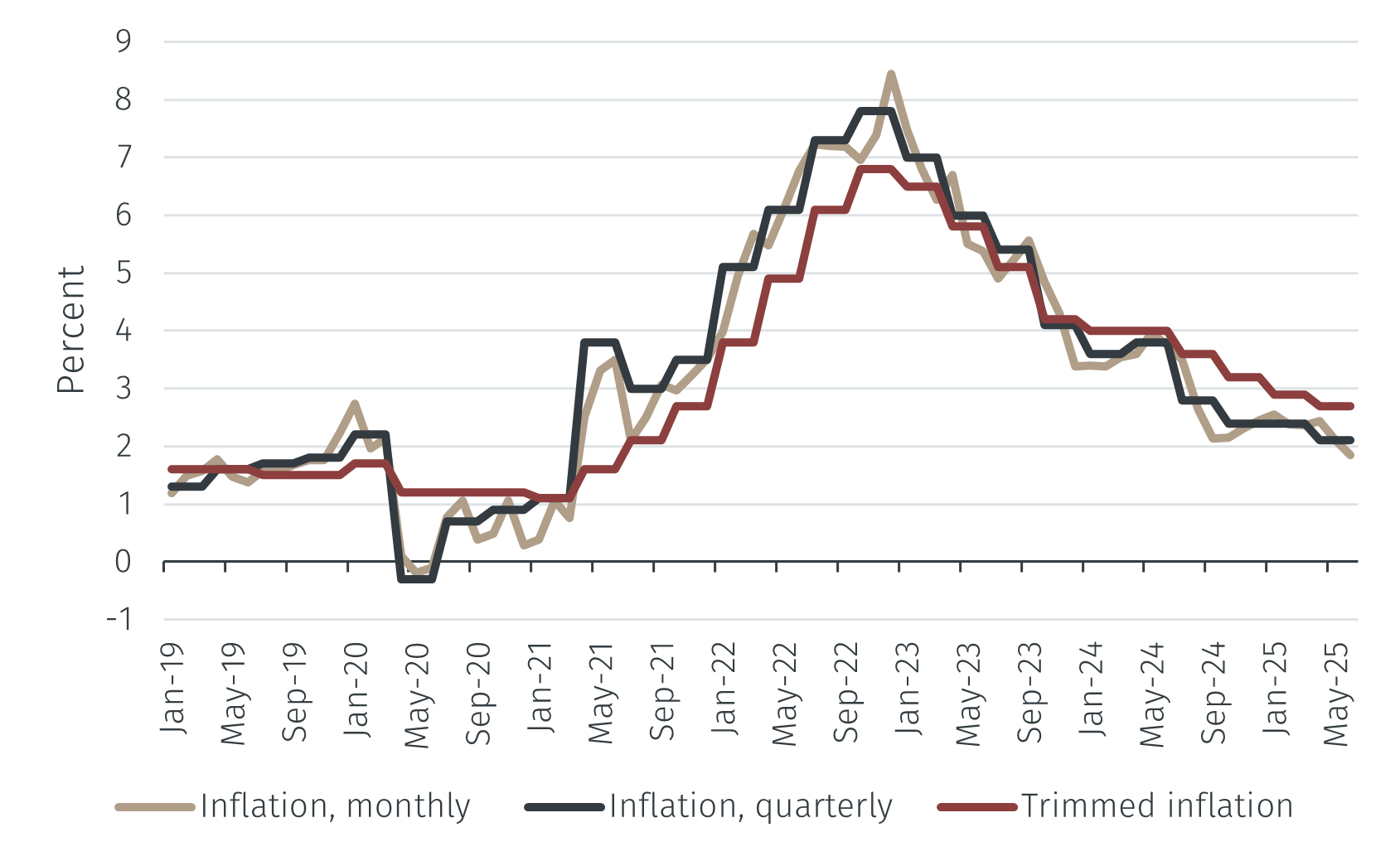
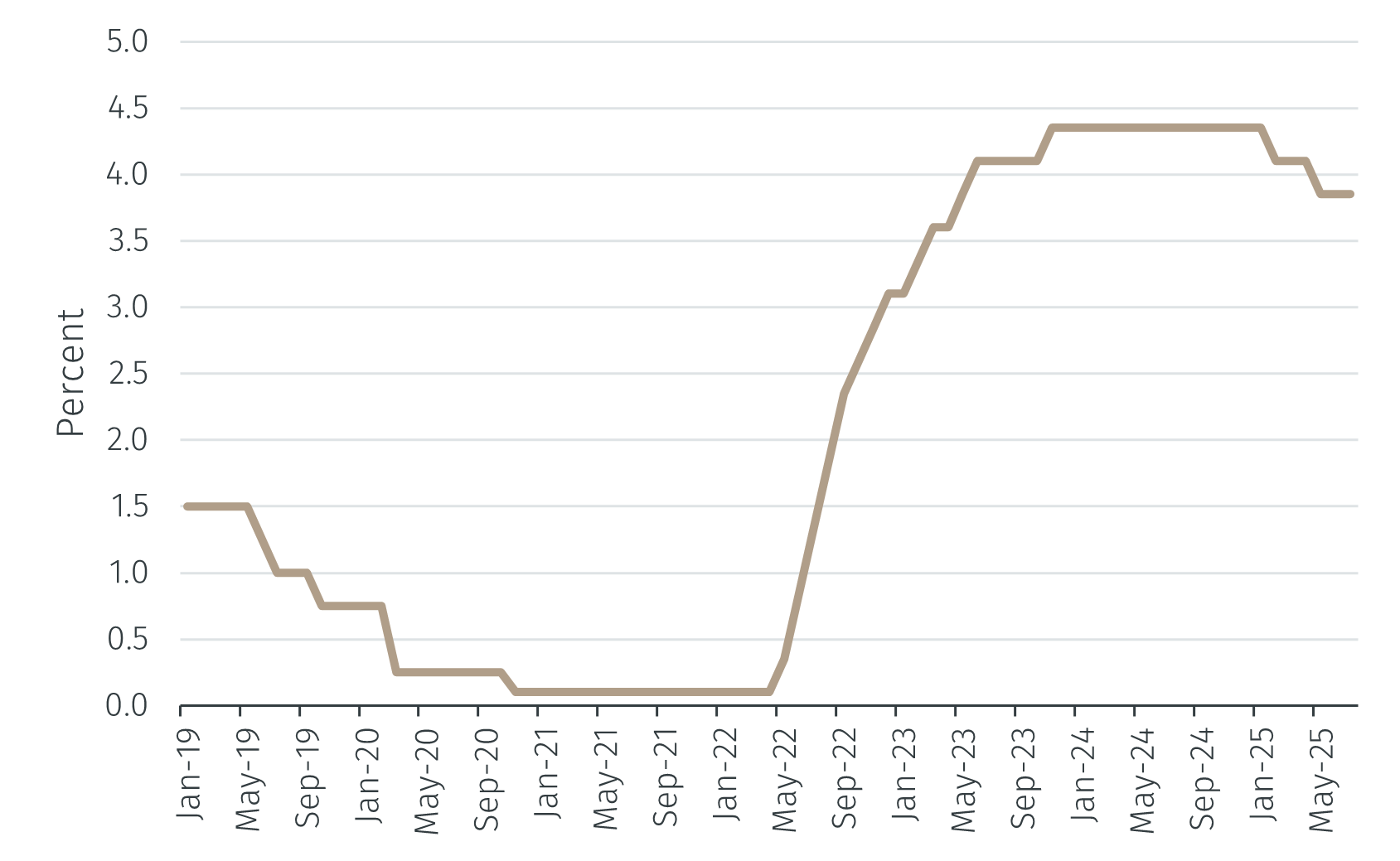
Figure 1. Inflation

RBA1.png

Source: Australian Bureau of Statistics. Data as of 2 August 2025.

During the pandemic, the RBA cut interest rates from 0.75% in early 2020 to 0.1%. As inflation rose, Australia’s central bank began a rate hiking cycle in May 2022, culminating in the cash rate reaching a peak of 4.35% in November 2023. It started easing policy again in February 2025, with the cash rate lowered to 3.85% by May.

Figure 2. RBA policy rate

RBA2.png

Source: BIS. Data as of 2 August 2025.

Ahead of the July meeting, many observers had expected another rate cut. However, the second quarter CPI data were not yet available. The most recent inflation readings were from the first quarter of 2025, when headline inflation stood at 2.4% YoY and trimmed mean inflation at 2.9% YoY. While these values fell within the RBA’s 2-3% target range, they were arguably out of date.

Market expectations of a cut had been reinforced by the release of soft monthly inflation data for May. Nonetheless, the RBA chose to wait, citing the limited reliability of the monthly inflation data and its preference for waiting for the quarterly data to be released. It kept the cash rate at 3.85%.

The second quarter CPI release is now available. It shows inflation clearly within the target range, strengthening expectations that the RBA will lower the policy rate at its next meeting on 12 August.

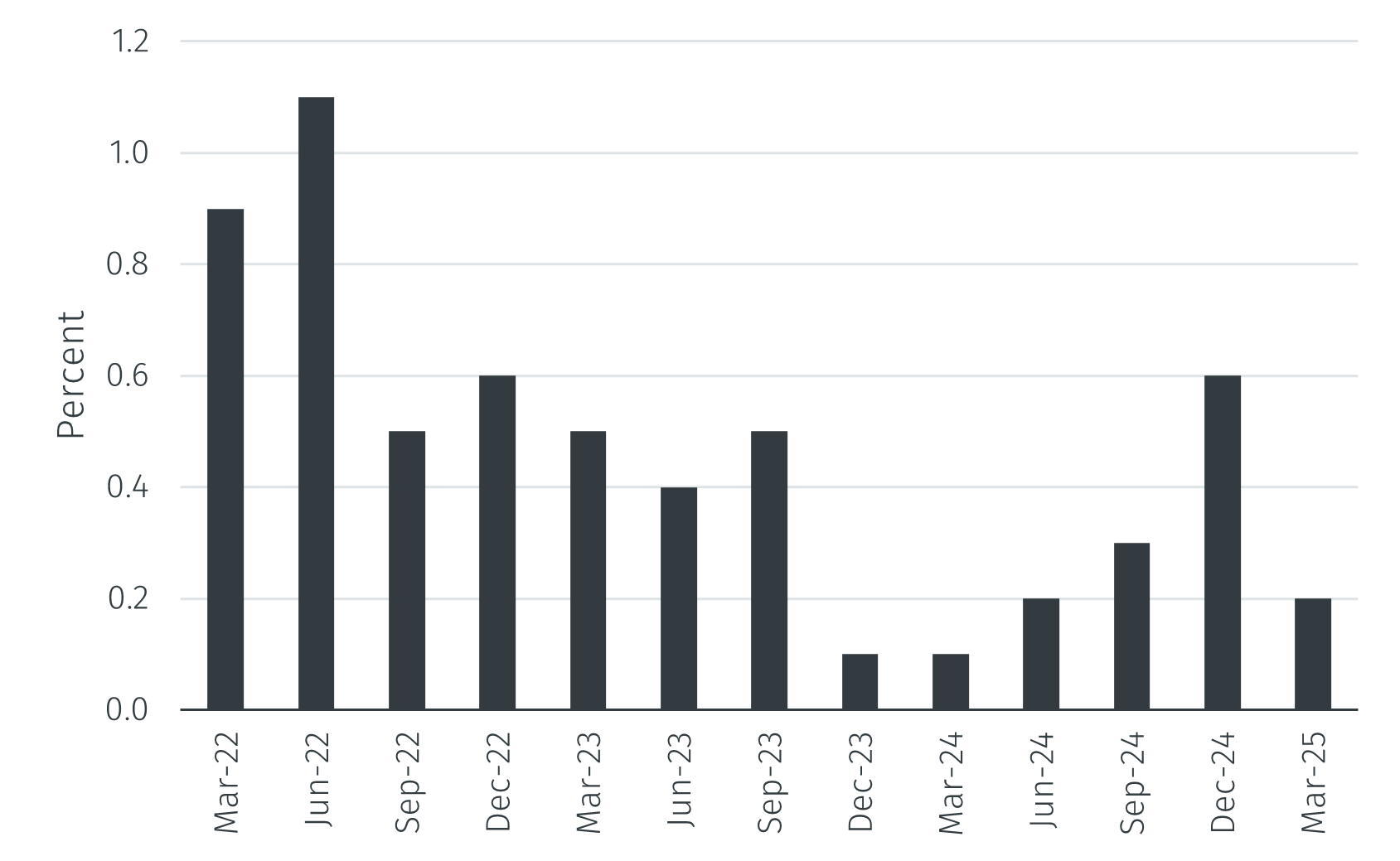
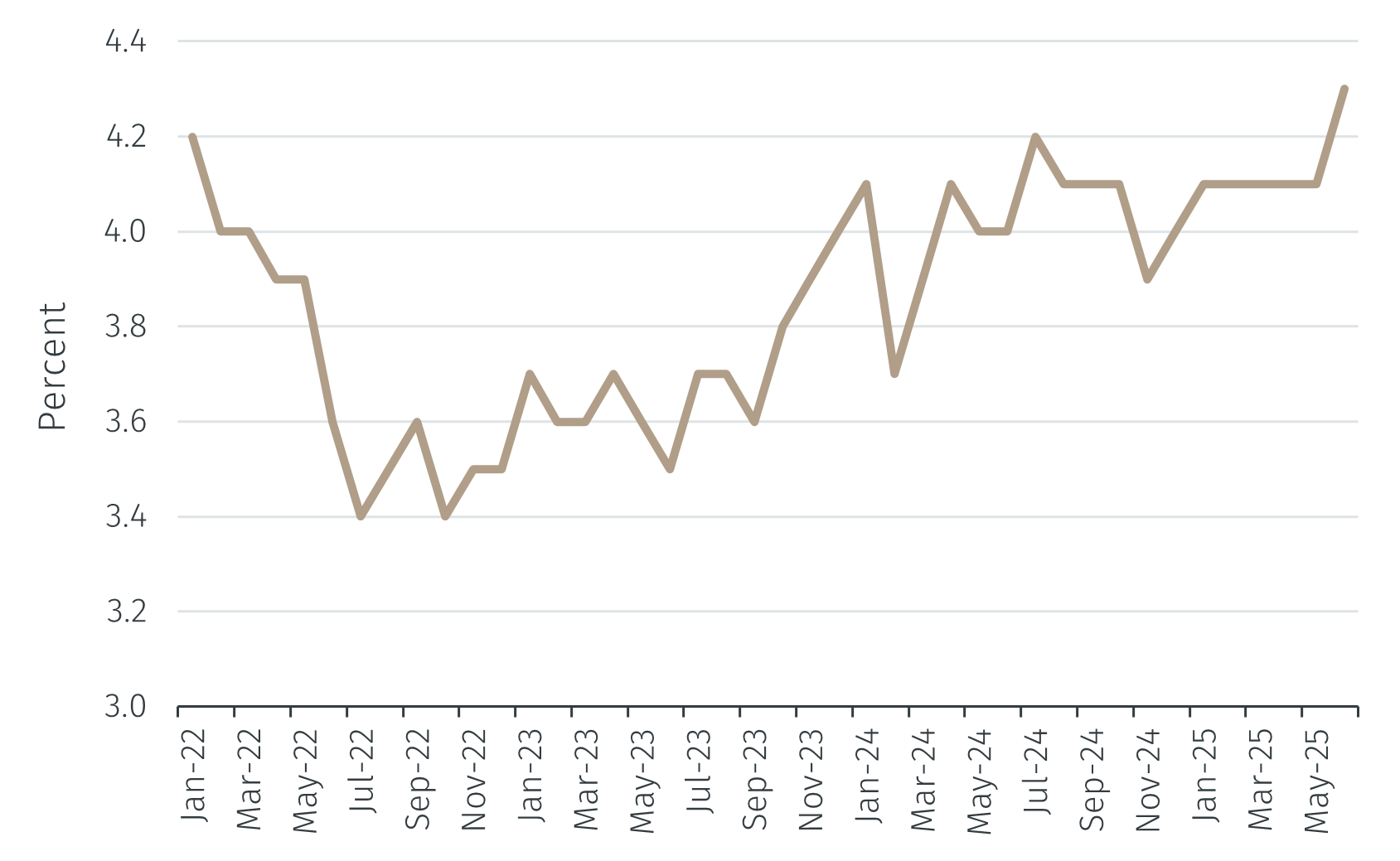
The broader economic context also supports such a move. Growth has slowed, and signs of labour market softening have begun to appear. Quarterly real GDP rose by just 0.2% in the first quarter of 2025 and has averaged only 0.25% since the final quarter of 2023. This subdued pace suggests weak domestic demand and rising slack in the economy. The unemployment rate has drifted up from a low of 3.4% in July 2022 to 4.3% in June 2025.

Figure 3. Real GDP growth (quarter-on-quarter)

RBA3.png

Source: Australian Bureau of Statistics. Data as of 2 August 2025.

Figure 4. Unemployment rate

RBA4.png

Source: Australian Bureau of Statistics. Data as of 2 August 2025.

The international backdrop adds to the case for easing monetary policy. Trade tensions have increased, particularly after the announcement of new tariffs by the United States. This raises downside risks to global growth and commodity demand, which is important for the Australian economy.

Most observers now expect the RBA to cut the cash rate by 25 basis points in August, taking it to 3.6%. Markets are pricing in further easing by year-end, with expectations centred on a rate close to 3.1%. If inflation continues to drift lower and labour market conditions weaken further, those cuts may well materialise.

In sum, the RBA has used tight monetary policy to bring inflation back under control. As inflation has declined, it has begun to ease policy gradually. While the decision to hold rates steady in July surprised markets, it looks understandable with hindsight. The available inflation data were limited and somewhat dated, and the RBA’s caution appears justified.

With the second quarter inflation data now published and showing underlying inflation at 0.7% for the quarter and 2.7% year-over-year, broadly in line with the RBA’s forecast for June, the case for a rate cut has strengthened. This new data also alleviates potential concerns about cutting rates while the labour market softens. A 25 basis point cut at the August meeting now looks not only possible, but likely.

Richiesto

Richiesto

Richiesto

Richiesto

Richiesto

Richiesto

Richiesto

Please note you can manage your subscriptions by visiting the Preferences link in the emails you receive from us.

Richiesto