No need for negative SNB rates

All Insights

Currently reading

RBA November meeting preview

Investment Insights • Macro

3 min read

RBA November meeting preview

The RBA faces a difficult policy call ahead of its 4 November meeting, with inflation proving more persistent than expected while labour market conditions are softening. In this Macro Flash Note, EFG Chief Economist Stefan Gerlach assesses the policy trade-off and the conditions that will determine the timing of the next rate cut.

The Reserve Bank of Australia (RBA) enters its November meeting with a more complex policy environment than earlier in the year. The cash rate has been reduced by 80 basis points to 3.6% since February. While inflation has declined markedly from its 2022 peak, the remaining disinflation is proving slower than expected. And forward-looking indicators now show a clearer softening in labour demand.

Inflation: progress, but not yet complete
Goods price inflation has eased decisively, reflecting the normalisation of supply chains and weaker tradables inflation. Services inflation, by contrast, has remained relatively sticky. This matters because services prices are less sensitive to global conditions and more closely tied to domestic wage growth and productivity. When productivity is weak, as it has been in Australia, wage growth tends to feed through more directly into prices.
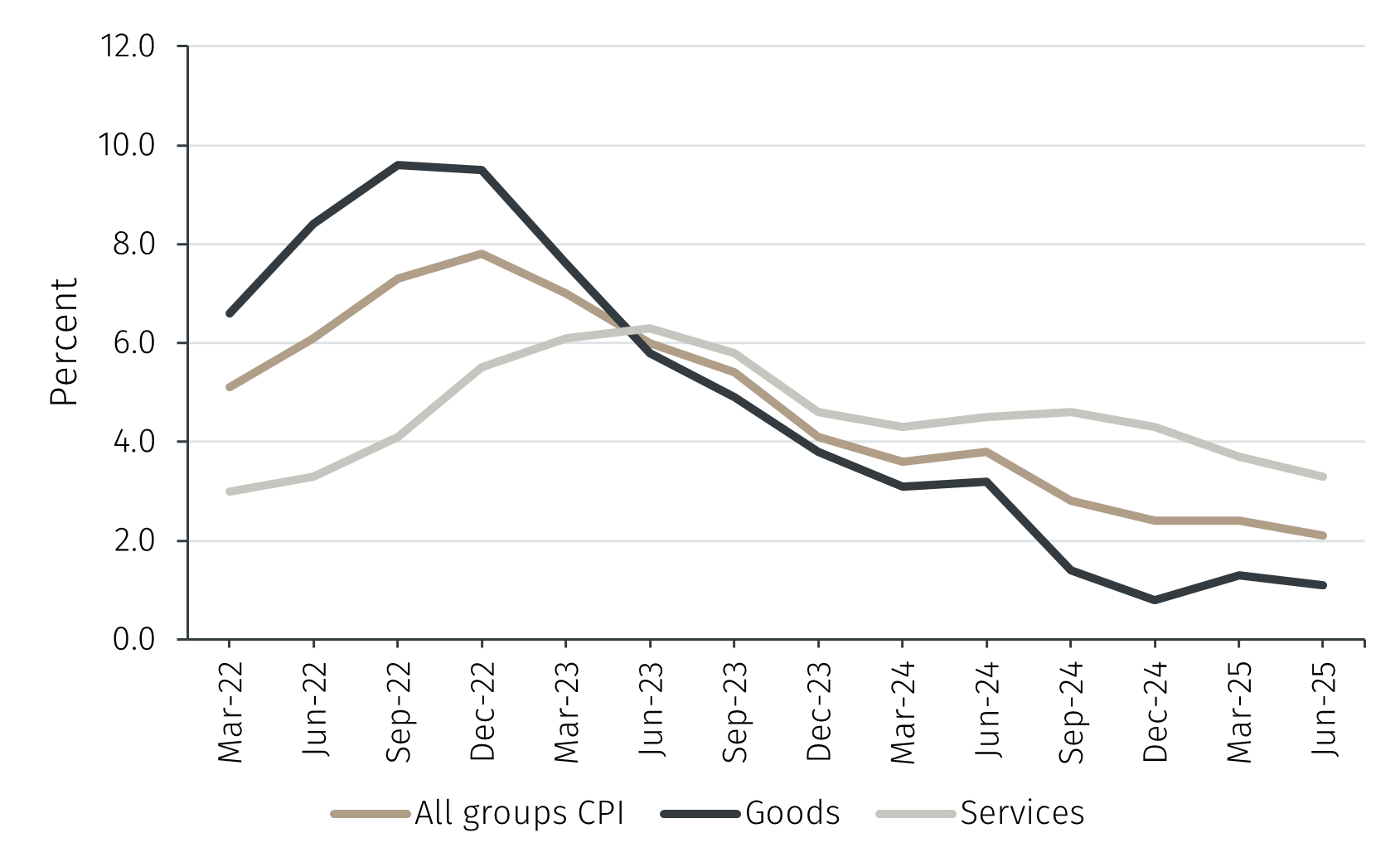
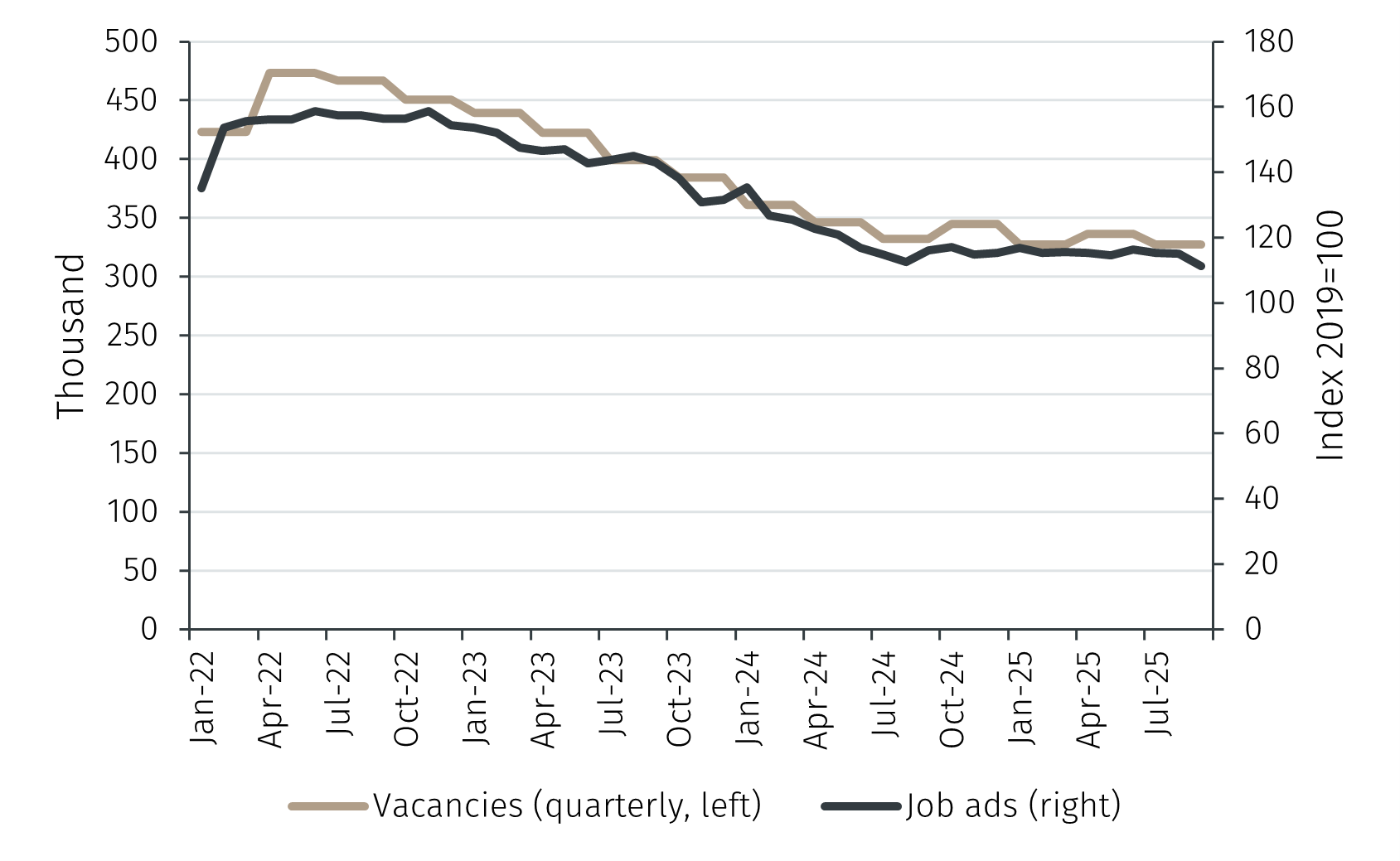
Figure 1. Inflation

RBA1.png

Source: ABS. Data as at 18 October 2025.

In the press conference1 following the September meeting, Governor Bullock noted that “the decline in underlying inflation has slowed” and that some services components had surprised on the upside. The RBA does not interpret this as an acceleration but sees a risk that inflation could stabilise above the midpoint of the 2–3% band if cost pressures persist. This is the key reason the Bank remains cautious about adjusting the policy stance prematurely.

Labour market conditions are cooling
Labour market conditions have continued to move toward balance. One early signal is the composition of employment, with full-time roles increasingly replaced by part-time positions — a pattern typically associated with firms becoming more cautious about hiring. Although overall employment remains high, this shift indicates that labour demand is less robust than earlier in the year.

Forward-looking indicators reinforce this trend. Job vacancies and job advertisements have been declining for several months, pointing to a sustained easing in hiring appetite rather than a temporary fluctuation.

Figure 2. Vacancies and job ads

RBA2.png

Source: ANZ and ABS. Data as of 18 October 2025.

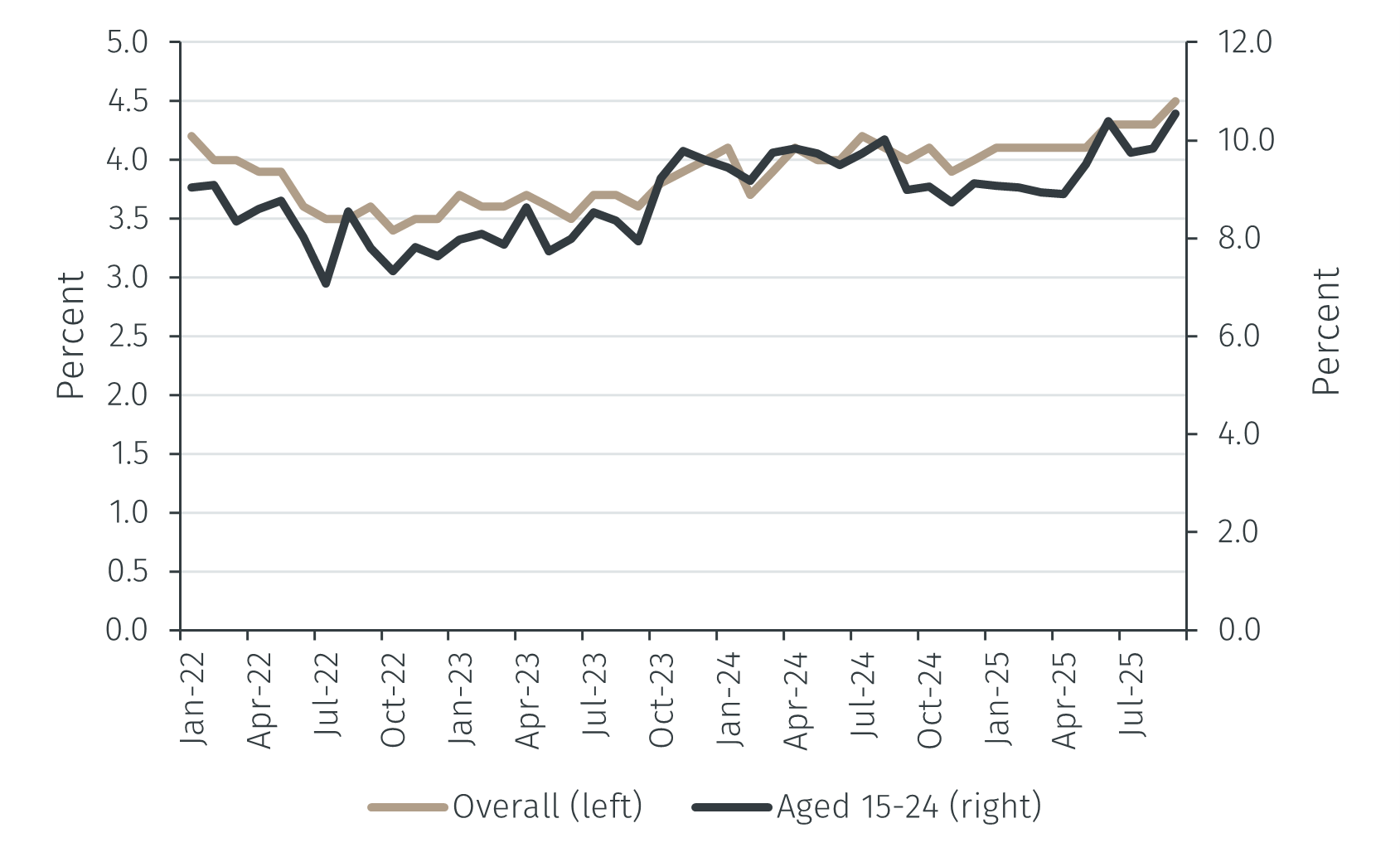
Headline indicators have now begun to reflect this shift. The unemployment rate has risen to 4.5%, the highest since late 2021, with youth unemployment rising more sharply. While the RBA still describes conditions as “a little tight,” the direction of change is now clearly toward loosening.

Figure 3. Unemployment rate

RBA3.png

Source: ABS. Data as at 18 October 2025.

Implications for the November decision
The combination of persistent services inflation and softening labour conditions has left the November decision finely balanced. Under normal circumstances, the cooling in labour demand would strengthen the case for further easing. However, services inflation is declining more slowly than earlier in the year, and weak productivity limits the scope for nominal wage growth to normalise inflation without policy support.

The third quarter consumer price index inflation release, due at the end of October, will likely be the decisive input. A softer reading would create space for an additional cut. A firmer outcome would increase the likelihood of a pause and defer any further move into early 2026.

The RBA is also mindful that monetary policy operates with lags. Three cuts have already been delivered this year, and their effects are still working through household spending, hiring decisions and price-setting behaviour. The policy stance is therefore still doing some of the work that has not yet shown up in the data.

For now, the timing of the next adjustment will depend on whether inflation continues to converge toward the midpoint of the target band without allowing labour market slack to widen more than intended. The risks on both sides are now more evenly balanced than at any point this year.

1 https://www.rba.gov.au/speeches/2025/mc-gov-2025-09-30.html

Richiesto

Richiesto

Richiesto

Richiesto

Richiesto

Richiesto

Richiesto

Please note you can manage your subscriptions by visiting the Preferences link in the emails you receive from us.

Richiesto