2. Trough interest rates in advanced economies; opportunities in emerging markets

Currently reading

2. Managing expectations: Navigating the interest rate environment

Macro and Policy

2. Managing expectations: Navigating the interest rate environment

Key takeaways

  • Inflationary pressures risk pushing central banks towards excessive tightening, despite resilient labour markets and contained underlying inflation.
  • Government debt and fragile fiscal positions are adding a second layer of risk sentiment for bond investors, particularly in longer-dated bonds.
  • Bond markets face additional pressures due to the need to absorb sizeable issuance from some large technology companies.

Since tensions in the Gulf erupted at the end of February 2026, the global monetary policy outlook has changed. The surge in energy prices has pushed headline inflation higher across the major economies, while non-energy inflation has been broadly stable. The question at the start of 2026 was: when will central banks cut rates? Looking towards 2027, the more relevant question now is: how much further will rates have to rise and is there a risk of markets over-reacting?

The pattern is strikingly similar across countries. The energy shock has raised headline inflation, but economic activity has proved surprisingly resilient in most major economies. This combination matters for monetary policy. Stronger activity sustains demand, making it easier for firms to pass higher energy costs on to consumers and increasing the risk that these costs eventually spread to wages and other prices. At the same time, strong activity reduces the risk that tighter monetary policy will trigger a recession.

Have markets over-reacted?
Markets have responded to the energy shock by sharply raising expected policy rates. The question is whether they have gone too far. While further tightening may be needed, there is still little evidence that higher energy prices are spreading to wages and underlying inflation. The absence so far of substantial second‑round effects suggests that markets may be pricing in more tightening than central banks will ultimately deliver.

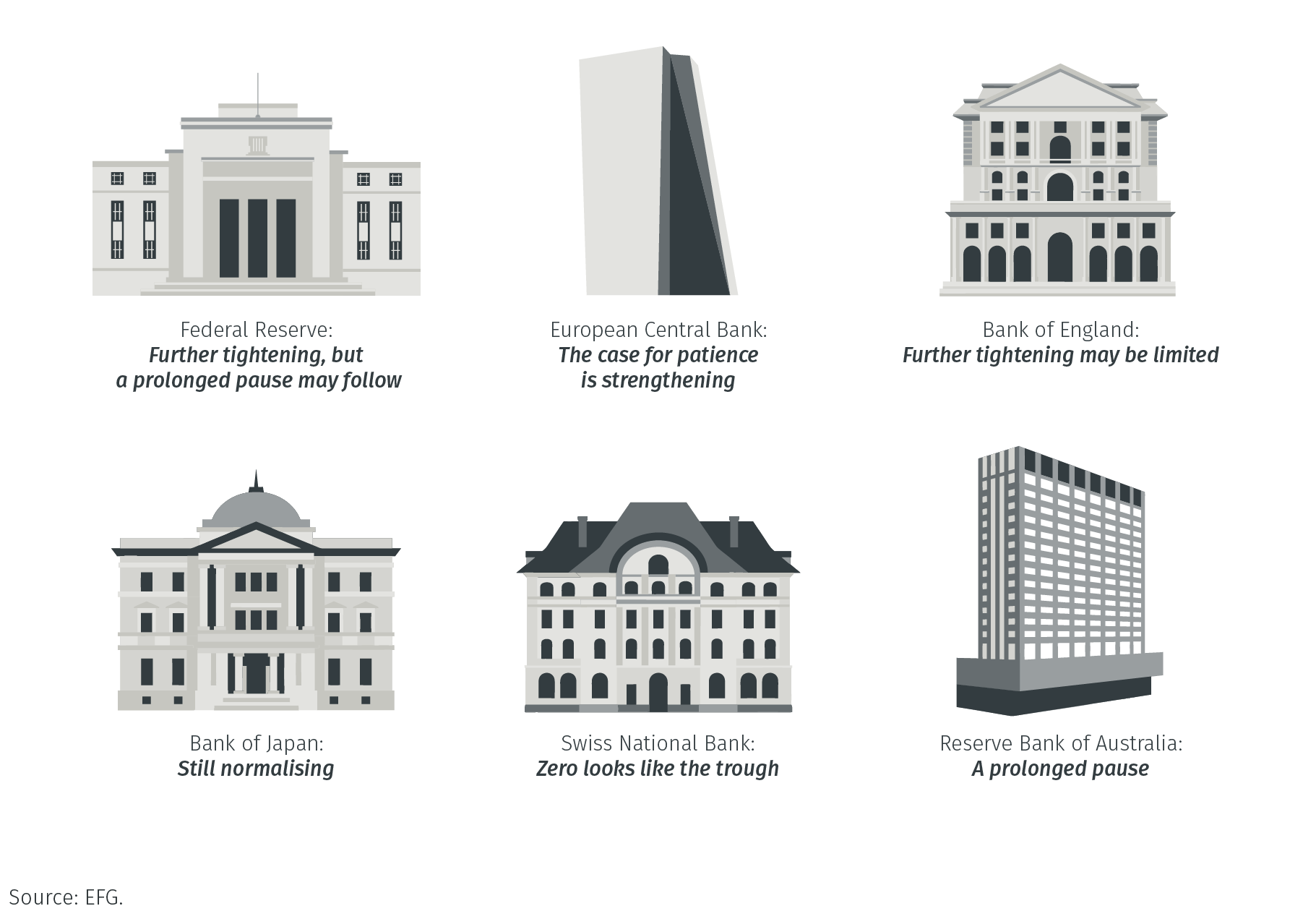
Figure 4. Central bank expectations for 2027

02_EFG_Outlook_2027_EN_Charts_Website__Figure4_Source.png

Our views on the major central banks are as follows:

Federal Reserve:
The US starts from the most difficult inflation position, with inflation already well above target and the economy and labour market still resilient. The Federal Reserve (Fed) has raised rates, and a further increase seems likely, but recent signs of a softer labour market argue against a sustained tightening cycle. Unless higher energy costs begin spreading to wages and underlying inflation, one or two more increases followed by an extended pause seems the most likely outcome.

European Central Bank:
The European Central Bank (ECB) has already raised rates twice since the energy shock, but there is still little evidence that higher energy prices are spreading to underlying inflation and wage growth remains contained. The resilience of the economy makes further tightening less costly, but not necessarily more urgent. Unless second-round effects emerge, the ECB may have little reason to raise rates much further, suggesting that markets may be anticipating more tightening than what is actually delivered.

A more significant development for the ECB is President Lagarde's impending exit on 7 February 2027. At the same time, the terms of Chief Economist Philip Lane and Executive Board member Isabel Schnabel will come to an end. Therefore, the ECB is to face significant changes in senior leadership, bringing with it some uncertainty regarding the ECB's future reaction function.

Bank of England:
The UK faces a similar inflation problem, but a softer labour market gives the Bank of England more reason to proceed cautiously. Wage growth has slowed, unemployment has increased, the Bank Rate is already restrictive, and the economy is less resilient than those of the US and euro area. Further tightening may be needed if second-round effects emerge, but a sustained tightening cycle seems unlikely.

Bank of Japan:
Japan is at a different stage of the monetary cycle. Growth is resilient, the labour market is tight, wages are rising rapidly and inflation is expected to remain above the Bank of Japan (BoJ) 2% target. With the policy rate at 1.25%, monetary policy remains accommodative, leaving room for further normalisation, potentially towards 2% in the first half of 2027, although concerns about growth could slow the process.

Swiss National Bank:
Switzerland remains the main exception because inflation is just below the 1% midpoint of the Swiss National Bank's (SNB) price stability range and there is little evidence of second-round effects. The economy has remained healthy, the franc has weakened and monetary policy is accommodative. The SNB can afford to wait, but when it eventually moves, an increase looks more likely than a cut: zero increasingly looks like the trough of the current interest rate cycle.

Reserve Bank of Australia:
The Reserve Bank of Australia (RBA) raised rates five times in 2026, bringing the cash rate to 4.85%. Inflation remains stubbornly above target and higher energy prices have worsened the outlook. However, further tightening now seems unlikely. Rising unemployment, subdued consumption and falling house prices suggest that monetary policy is already restraining activity. The RBA is likely to keep rates unchanged for much of 2027, balancing persistent inflation pressures against the risk of a further slowdown in economic activity.

“ ...markets may be pricing in more tightening than central banks will ultimately deliver. ”

For investors, the implication is that policy rates may not need to rise as high as current market pricing suggests, especially in the US and euro area, but the path will remain uncertain and data dependent.

When the long end starts to worry about debt
Central banks can control short‑term policy rates at the front end of the yield curve, but the long end reflects changes in policy expectations, risk premia and debt supply. The energy shock caused by the intensification of the conflict in the Middle East has affected all three.

“ Despite a plan to control US fiscal spending, progress has been slow. ”

During 2026, 10-year yields in the UK, US and France rose sharply. Higher energy prices have raised inflation expectations, and uncertainty over how the conflict will end has added to the doubt. This has increased the extra yield investors demand for holding longerdated bonds, as reflected in the rise in long yields since the end of the first quarter of 2026. At the same time, elevated government debt and growing concerns over fiscal sustainability are adding another layer of uncertainty, particularly at the longer end of the curve.

Fiscal headroom is limited
Over the last few years, and in previous editions of the Outlook, we have warned investors about the implications of large fiscal deficits in economies such as the US, UK and France. Despite a plan to control US fiscal spending, progress has been slow. In the UK, the high welfare bill means there are limited actions the Treasury can take to reduce spending. In France, discussions over the 2027 budget have sparked political divisions and social unrest ahead of the elections.

With debt levels already elevated, central banks also factor the impact on long-term borrowing into their policy decisions. The same three economies therefore remain vulnerable to pressure at the long end of the curve (Figure 5). Although high long-term yields offer attractive returns and a perception of low risk, investors should be wary of these countries’ fragile fiscal positions, which could undermine long-dated bonds.

Where the fiscal risk reward looks better: a fresh look at EM
Against this backdrop, some emerging markets (EM) may offer more compelling risk-adjusted opportunities than parts of the developed world (Figure 6). Economies such as India, Mexico, Brazil, South Korea, South Africa or Indonesia have lower debt-to-GDP ratios and have worked towards strengthening their macro fundamentals.

However, high rates and a stronger US dollar have made EM debt less attractive in hard currency (debt issued in US dollars rather than local currency). Spreads (the extra yield over safe government bonds) on both sovereign and corporate debt continue to look tight, close to 25-year lows.

For investors willing to be selective and diversified, any resolution to the Iran war could lead to interesting opportunities in India, South Korea and Indonesia as lower energy prices would reduce the cost of energy subsidies. Brazil and Mexico could also be interesting as they have continued to manage macro fundamentals better. For both opportunities, stability in the US dollar or long-term US rates would be a trigger point.

Our view for 2027

As central banks navigate inflationary pressures, the risk is that monetary policy becomes too restrictive, weighing on economies in which underlying inflation remains contained and labour markets are robust.

At the same time, elevated government debt and growing concerns over fiscal sustainability are adding another layer of uncertainty, particularly at the longer end of the yield curve. Furthermore, the uncertainty is being augmented by the large volume of hyperscaler bond issuance.

Looking towards 2027, the key question is whether major economies can bring inflation under control without tightening policy so far, or for so long, that they undermine growth and market stability.

Our central view is that:

  • Markets are currently pricing in more tightening than central banks may ultimately deliver in the US and euro area;
  • The front end of yield curves (driven by policy expectations) has room to fall if second‑round effects remain limited;
  • The long end will remain sensitive to fiscal concerns and risk premia, especially in highly indebted countries such as the US, UK and France.

For you as an investor, the message from Theme 2 is to be deliberate about where you take duration and sovereign risk, being cautious about exposure to long‑dated bonds in highly indebted markets and using diversified emerging‑market strategies selectively. The points below translate this into concrete portfolio actions for the year ahead.

Action for investors:

  • Be cautious with long-dated US, UK and French government bonds. The sharp rise in long-term yields reflects not only higher inflation uncertainty but also increased risk premia and fiscal concerns. Limit exposure to long-maturity bonds in these markets to manage volatility and favour short- to intermediate-duration bonds. As suggested in Theme 1, it may pay to be tactical when sentiment turns overly negative.
  • Use diversified emerging-market (EM) bond exposure selectively. Some emerging markets offer a better structural risk reward, but hard currency EM debt remains sensitive to high global rates and a strong US dollar. Use diversified EM bond strategies and avoid concentrated single-country positions.

Richiesto

Richiesto

Richiesto

Richiesto

Richiesto

Richiesto

Richiesto

Please note you can manage your subscriptions by visiting the Preferences link in the emails you receive from us.

Richiesto