
What Pythagoras’ theorem can teach us about the Fed

All Insights

Currently reading

No surprises as BoE keeps Bank rate unchanged and reduces QT

Investment Insights • Macro

2 min read

No surprises as BoE keeps Bank rate unchanged and reduces QT

The Bank of England voted by 7-2 to maintain the Bank rate at 4% and reduce the pace of its bond-selling program. In this Macro Flash Note, Economist & Strategist Joaquin Thul analyses the MPC decisions and their impact on the UK economy.

There were no surprises at the last meeting of the Bank of England (BoE)’s Monetary Policy Committee (MPC) where two main decisions were taken. The first decision related to the level of the Bank rate, the BoE’s main monetary policy tool, which was maintained at 4.0%. This was priced-in by markets given the evolution of data on activity, the labor market and inflationary pressures.

UK inflation remained elevated in August at 3.8% year-on-year (YoY). The BoE estimates inflation to peak close to 4.0% in September before gradually converging to the 2.0% target in 2027. Services prices, which have been a key driver of domestic price pressures, decelerated marginally last month to 4.7% YoY, while goods prices picked-up to 2.8% YoY.

Our estimates show that a measure of core services inflation, excluding volatile components, administered prices, rents and packaged holidays, has stabilised at 3.7% YoY in August (see Chart 1). BoE Governor Andrew Bailey said that government policies related to payroll taxes and increases in the minimum wage added to inflationary pressures.
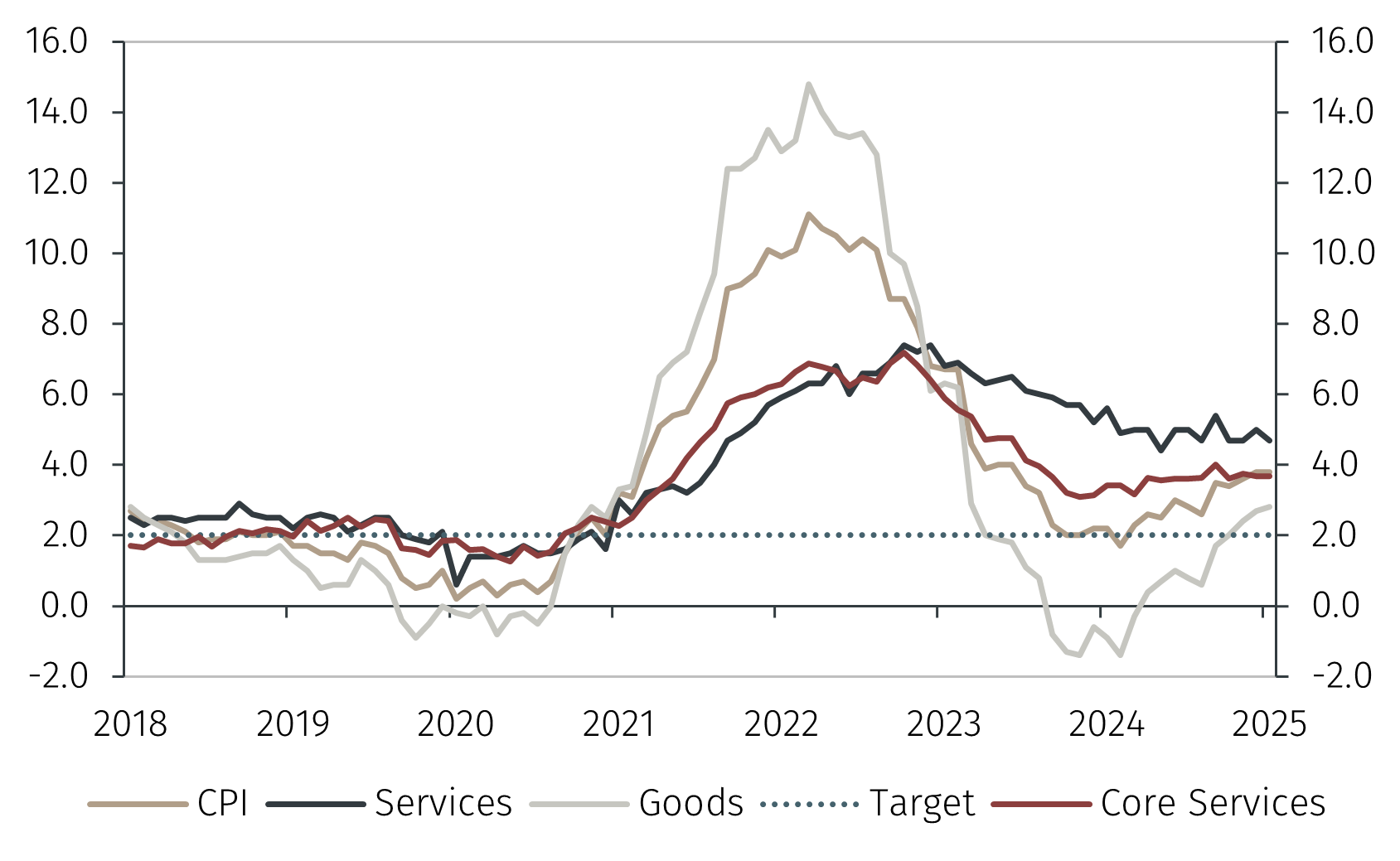
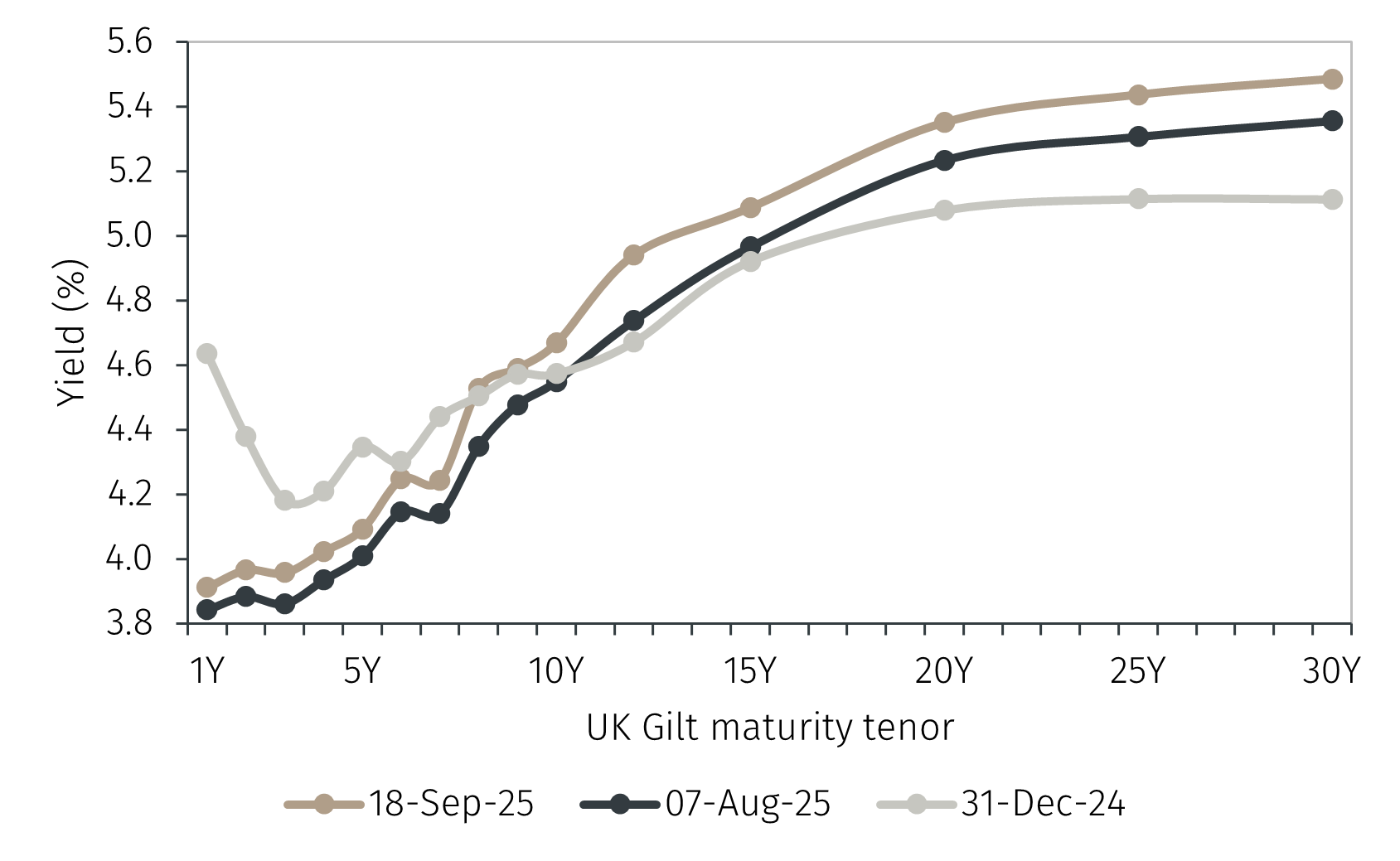
Chart 1. Core services remain stable in August (%)

BoE1.png

Source: LSEG Data & Analytics, ONS and EFGAM. Data as of 17 September 2025.

Regarding activity, the MPC argues that underlying UK GDP growth remains subdued, consistent with recent loosening of labour market data. Wage growth has slowed from 4.8% YoY in June to 4.6% YoY in July, but it remains above the levels consistent with the BoE’s 2.0% inflation target.

The second decision was related to the Quantitative Tightening (QT) program. The MPC decided to reduce the pace at which the BoE is selling its stock of UK Gilts held for monetary policy purposes from £100bn a year to £70bn a year. This is at the upper range of market expectations. BoE Chief Economist Huw Pill voted to maintain the level of QT unchanged, while Catherine Mann, an external MPC member, voted for a larger reduction of QT to £62bn a year.

Different to other central banks, which have decided to allow sovereign bonds held in their balance sheets to mature, the BoE is reducing its holdings through a combination of actively selling some of the UK gilts held and allowing others to mature. The BoE, alongside other major central banks, expanded the balance sheet since 2009 in response to the global financial crisis to support the economy.

Although the decision has the potential to affect bond yields at a time of elevated long-dated bond yields, the BoE claims its QT implementation has not caused major disruptions in financial markets. However, it was noted at the recent meeting their intention to sell less of the longer-dated Gilts to avoid a large effect on long-dated bond yields. These have recently been under upward pressure due to a combination of global uncertainty and concerns over the sustainability of UK public debt. Higher interest rates would increase the debt service payments, adding pressure to the already constrained fiscal headroom of the UK Treasury.

The long-end of the UK yield curve has increased since the start of the year, with 30-year yields rising from 5.11% at the end of December 2024 to 5.35% in early August at the time of the previous MPC meeting, and to 5.48% as of 18 September 2025 (see Chart 2).

Chart 2. Long-end of UK yield curve reflects fiscal concerns

BoE2.png

Source: LSEG Data & Analytics and EFGAM. Data as of 18 September 2025. Past performance is not indicative of future results.
 

Overall, there were no surprises at the last MPC meeting. Bank rate was left unchanged, highlighting the need to maintain a gradual and careful approach at reducing monetary restraint given the upside risks to inflation. Additionally, the pace for QT was dialed back to prevent further increases in long bond yields.

Going forward, the MPC highlighted the need to continue assessing incoming data to guide future decisions. The price of future contracts on short-term interest rates currently imply only two more rate cuts by December 2026. However, if inflation follows the path expected by BoE officials there will be scope for one more 25bps reduction in the Bank rate this year.

Richiesto

Richiesto

Richiesto

Richiesto

Richiesto

Richiesto

Richiesto

Please note you can manage your subscriptions by visiting the Preferences link in the emails you receive from us.

Richiesto