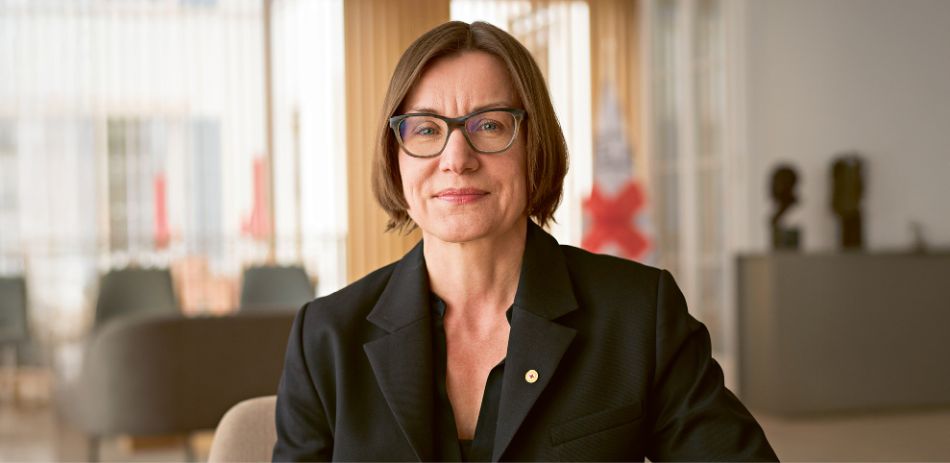
You have been President of the International Committee of the Red Cross (ICRC) since autumn 2022. What are the greatest challenges currently facing the organisation in its humanitarian work around the globe?
In the three years since I was appointed as President of the ICRC, wars have multiplied and intensified, while the laws that govern warfare have often been disregarded. At the same time, states are increasingly investing in defence and disinvesting in humanitarian aid. The economic fallout of wars waged without limits is astronomical, and the human toll is immeasurable. This creates enormous challenges for our organisation as we seek to provide protection and assistance for victims of armed conflict and strife around the world.
What is the impact of all of these wars and widespread unrest − and what is at stake if this trend continues?
According to our data, there are currently about 130 armed conflicts across the world. That is twice the number we recorded 15 years ago. This dangerous trend is being further aggravated by divisive politics. In terms of impact, I would say that there was a time when the world was shocked by scenes of human suffering due to the brutality of war or images of starving children. Now we scroll past them. But we cannot allow ourselves to become numb in the face of such atrocities. We must refuse to see violations of international humanitarian law as inevitable. Every hospital bombed, every city levelled and every community denied aid is a betrayal of our shared humanity. If we lose sight of this, we risk sleepwalking into a world where the barbarity of today’s wars become the baseline for the conflicts of tomorrow.
How important is it for ICRC employees to have a clear sense of purpose in their work?
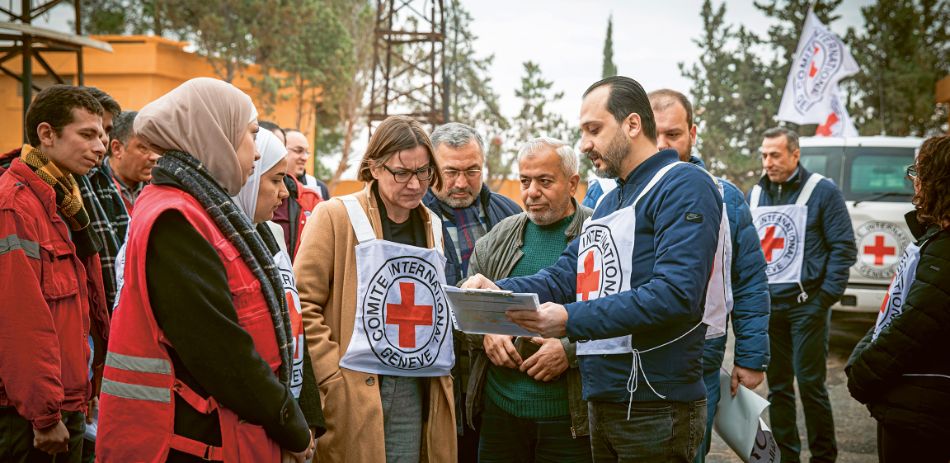
I believe that our purpose starts with a clear sense of who we are and what we stand for. The ICRC was created to uphold humanity at all times, including in those situations where it is the most difficult to remain impartial. Our people are exceptionally brave and committed because they know that they are helping to preserve the common good. They often leave behind their families and lives at home to work in highly dangerous and volatile environments to support others. As President of the ICRC, I am first and foremost guided by deep respect for what our teams endure and accomplish across the globe.
How do you and your colleagues cope with the risks and challenges that come with a job in the field of humanitarian aid or diplomacy? How do you recover from the harsh reality that you see on a daily basis?
Through longstanding experience, professionalism and careful planning. But this is only half of the story. Equally important are clarity of purpose and an unwavering adherence to our values and principles. It takes courage to engage with those whom the world condemns. Even if pressured by states and state leaders, we always remain neutral as it is the only way to reach people who need our help.
The ICRC is mandated by states to promote respect for the Geneva Conventions. Today, these rules are increasingly coming under pressure. What actions must states take to ensure they are upheld?
International humanitarian law is meant to protect all civilians and those no longer taking part in hostilities. Every state has ratified the Geneva Conventions and the obligations set out in those international treaties are not optional. When states apply these rules selectively – to their enemies but not to the allies of the enemy, they erode the very foundation of humanitarian law. We believe that states must do more to respect the rules they have endorsed and prevent armed conflict because it is the single greatest driver of humanitarian needs today. Ultimately, the protective power of international humanitarian law is only as strong as the political will of leaders to uphold it.
How can you reinforce the message about the enduring importance of these rules?
In 2024, the ICRC, together with Brazil, China, France, Jordan, Kazakhstan and South Africa, launched a global initiative to galvanise political commitment for the rules of war. This initiative is based on the belief that all states have an interest fostering a political climate where the rules of war protecting adversaries on the battlefield are upheld and strengthened. More than 90 states, including Switzerland, have since joined us in this effort, which will culminate in an international meeting to uphold humanity in war in 2026. Let’s not forget that the way wars are fought tomorrow will be defined by the choices leaders make today to preserve − or abandon − the core foundations of global peace and stability.
You meet with leaders and parties to conflict across the world to promote international humanitarian law and negotiate access for your teams to work. How does the ICRC succeed in maintaining dialogue with all sides in conflict?
One word: Neutrality. We are often criticised for not picking sides, but if we did, we would not be able to speak with warring sides about their obligations under the rules of war and access those who need to assist on all sides of the frontline. Today, the ICRC not only speaks with states around the globe about their obligations under the Geneva Conventions. We also talk to over 240 non-state armed groups, and this dialogue is critical, as we estimate that over 200 million people now live in areas under their control. We build trust by speaking confidentially with all parties to armed conflicts about the violations we see taking place on the ground and what must be done to ensure respect for the rules of war. Our confidential dialogue with all sides in conflict allows the ICRC to have access to people in need where few, if any, other humanitarian organisations can operate.
How does the ICRC’s neutrality differ from that of Switzerland?
States do not need to be neutral, but they need the ICRC to be. It is for this reason that we are often called upon by parties involved in conflict to act as a neutral intermediary. This role is distinct from that of a negotiator or mediator. It is about carrying out humanitarian actions agreed by warring sides, including those set out under ceasefire agreements.
Competition for donations is fierce among humanitarian organisations as government budgets come under pressure. How do you define a strategy and set priorities for your global operations at a time of growing humanitarian needs – and is it even possible to plan for the long term?
The decline in humanitarian budgets is forcing us to strengthen our systems, including through digital transformation, and to continuously adjust our footprint to focus on the areas where we can have the greatest impact. In 2024, we launched a new institutional strategy that asserts our determination to defend people’s rights and ensure protection under the rules of war. This means speaking directly to parties to conflict − both state and non-state entities − about their obligations under international humanitarian law. It means working in frontline areas to deliver lifesaving assistance.
Can you give us some examples of hotspots where you have a frontline presence?
The ICRC has over 300 staff in Gaza. We are also working in Sudan, Ukraine, the Democratic Republic of Congo and dozens of other conflict zones across the world. We have to be where the needs are greatest, and that often means operating in highly volatile and dangerous environments. It is equally important that we remain responsive when new conflicts break out.
How can the private sector – including financial institutions – support humanitarian efforts?
The private sector has always played a critical role in supporting humanitarian efforts. For example, EFG has been a supporter of the ICRC in recent years through its corporate giving and employee donations. The difference we can make each day in conflict zones across the world depends on the financial support that we receive. The generosity of individuals and companies has a direct and life-changing impact for those caught up in war.
In your role, you see both the very worst and the very best of humanity. Are there any particular moments or encounters that reminded you recently that compassion can still prevail, even in times of war?
I deliberately choose to believe that human nature is inherently good. Every life is worth saving. Reuniting even one person with their family makes every effort meaningful. A single message from a detained soldier to his mother can bring immense relief. Ensuring a family can lay a loved one to rest with dignity is always a cause worth negotiating for. Ultimately, as humans, we all want to be part of a greater good, and this is what keeps us striving for the better.