What Pythagoras’ theorem can teach us about the Fed

All Insights

Currently reading

Eurozone PMI data leaves the ECB in its comfort zone

Investment Insights • Macro

2 min read

Eurozone PMI data leaves the ECB in its comfort zone

Monthly purchasing managers' surveys provide reliable and timely indicators of the state of the eurozone economy. In this Macro Flash Note, Senior Economist GianLuigi Mandruzzato reviews the latest data and concludes that the European Central Bank (ECB) will remain in wait-and-see mode for some time.

After the announcement at the end of July that goods exports from the European Union to the US will be subject to 15% tariffs, there was some concern regarding the potential impact on the economy. Judging by the initial evidence, the eurozone so far appears to have absorbed the shock without any particular issues.

The August flash purchasing managers’ index (PMI) survey published on 23 August indicated increases in activity and employment, reducing concerns regarding the negative impact of US tariffs on eurozone growth (see Chart 1). Although the composite PMI remains only moderately above the 50 threshold that indicates growth in activity, in August it rose to its highest level in more than a year.
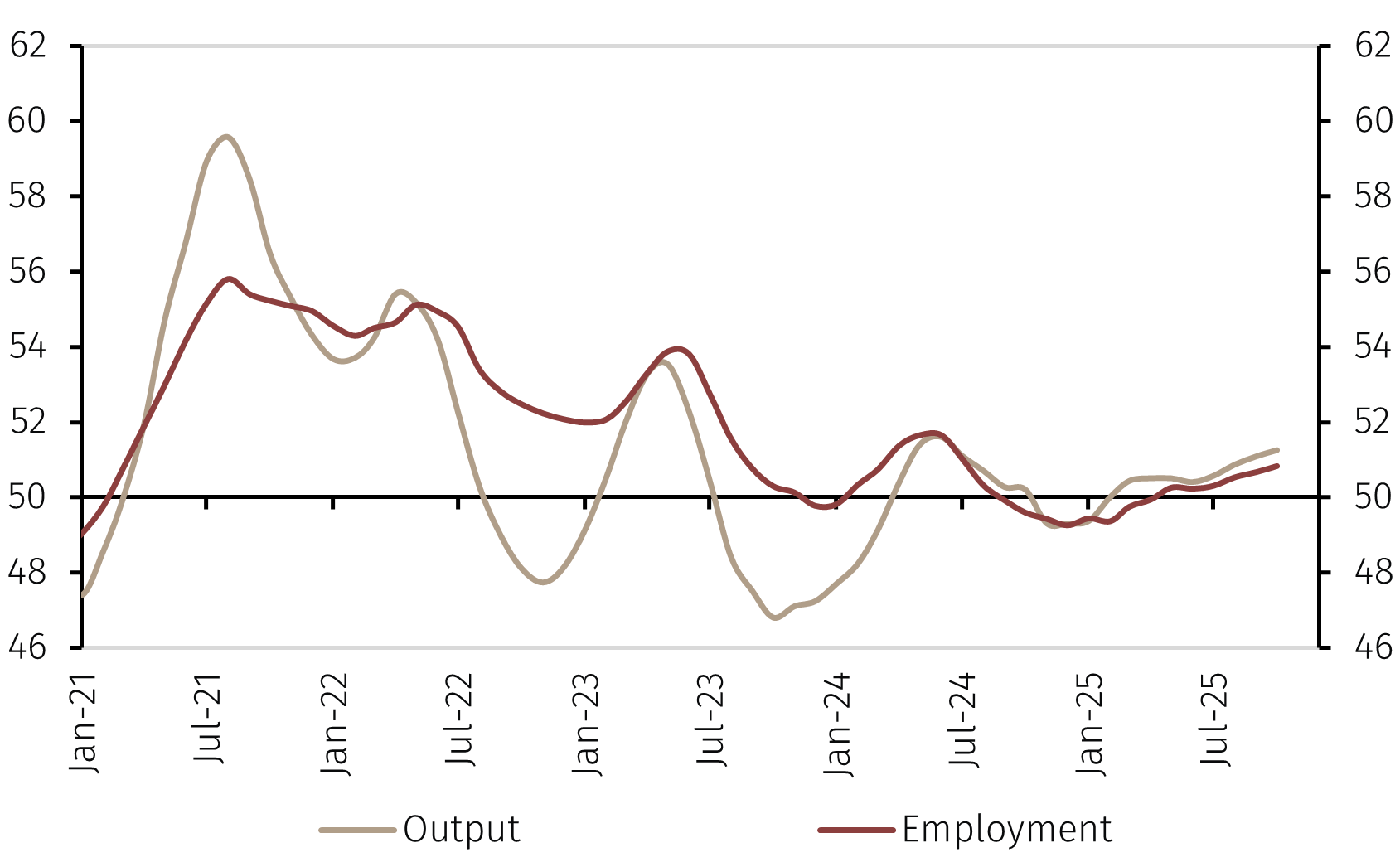
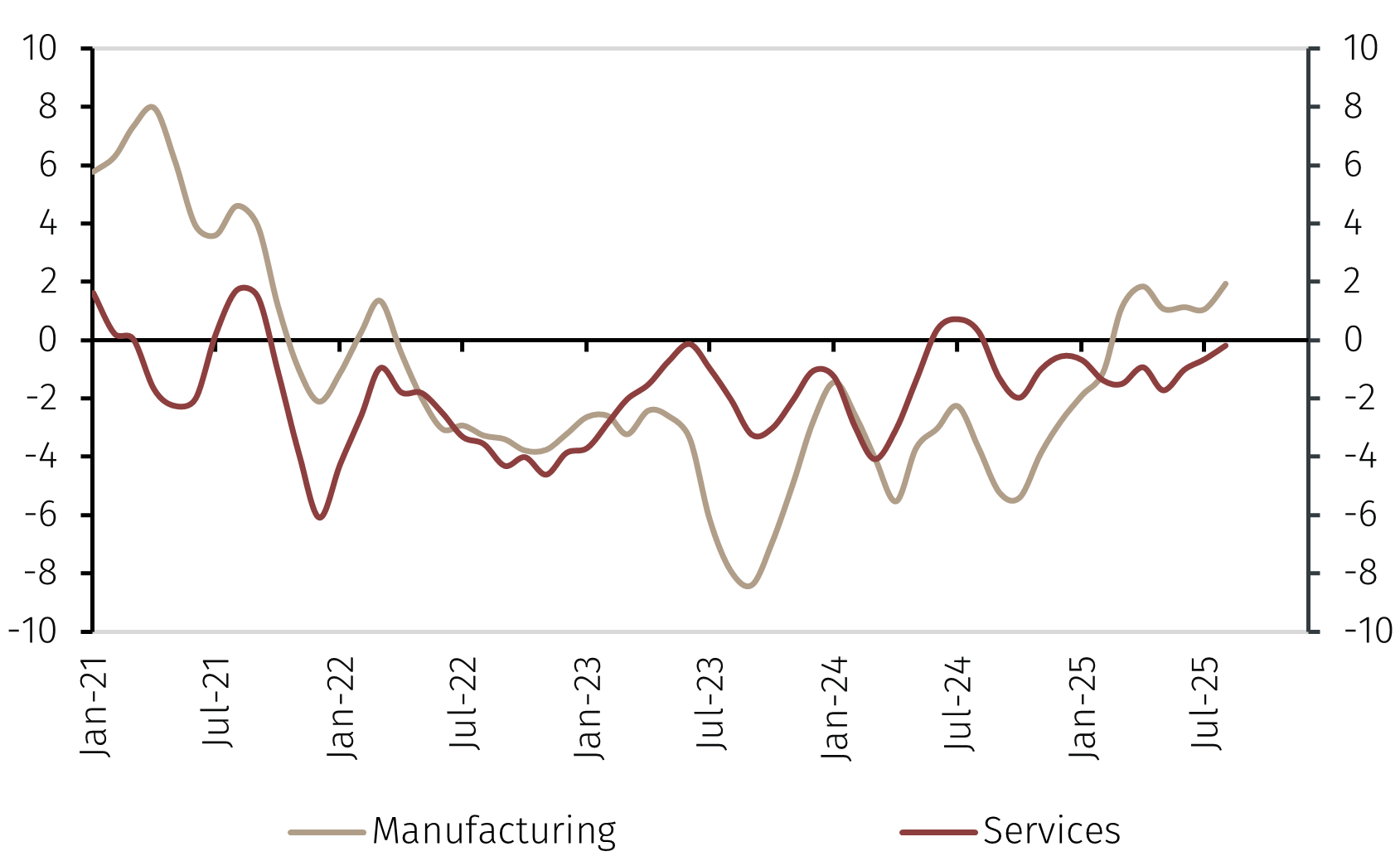
Chart 1. Eurozone Composite PMI output and employment

PMI1.png

Source: LSEG Data & Analytics and EFGAM calculations. Data as of 24 August 2025.

Furthermore, two aspects of the survey were encouraging. The improved new orders inflow was primarily driven by domestic demand and the manufacturing sector, suggesting it will be sustainable despite an uncertain global trade outlook. Furthermore, Germany's economic recovery is gaining momentum and it is no longer a drag on the rest of the eurozone (see Chart 2).

Chart 2. PMI new orders: Germany – rest of Eurozone

PMI2.png

Source: LSEG Data & Analytics and EFGAM calculations. Data as of 24 August 2025.

The improving outlook in Germany, and consequently in the whole eurozone, reflects several factors. These likely include increased confidence stemming from the new German government's plans for a strong fiscal expansion, the delayed effects of the ECB's interest rate cutting cycle that started in June 2024, and greater clarity on US trade policy following the uncertainties of recent months. 

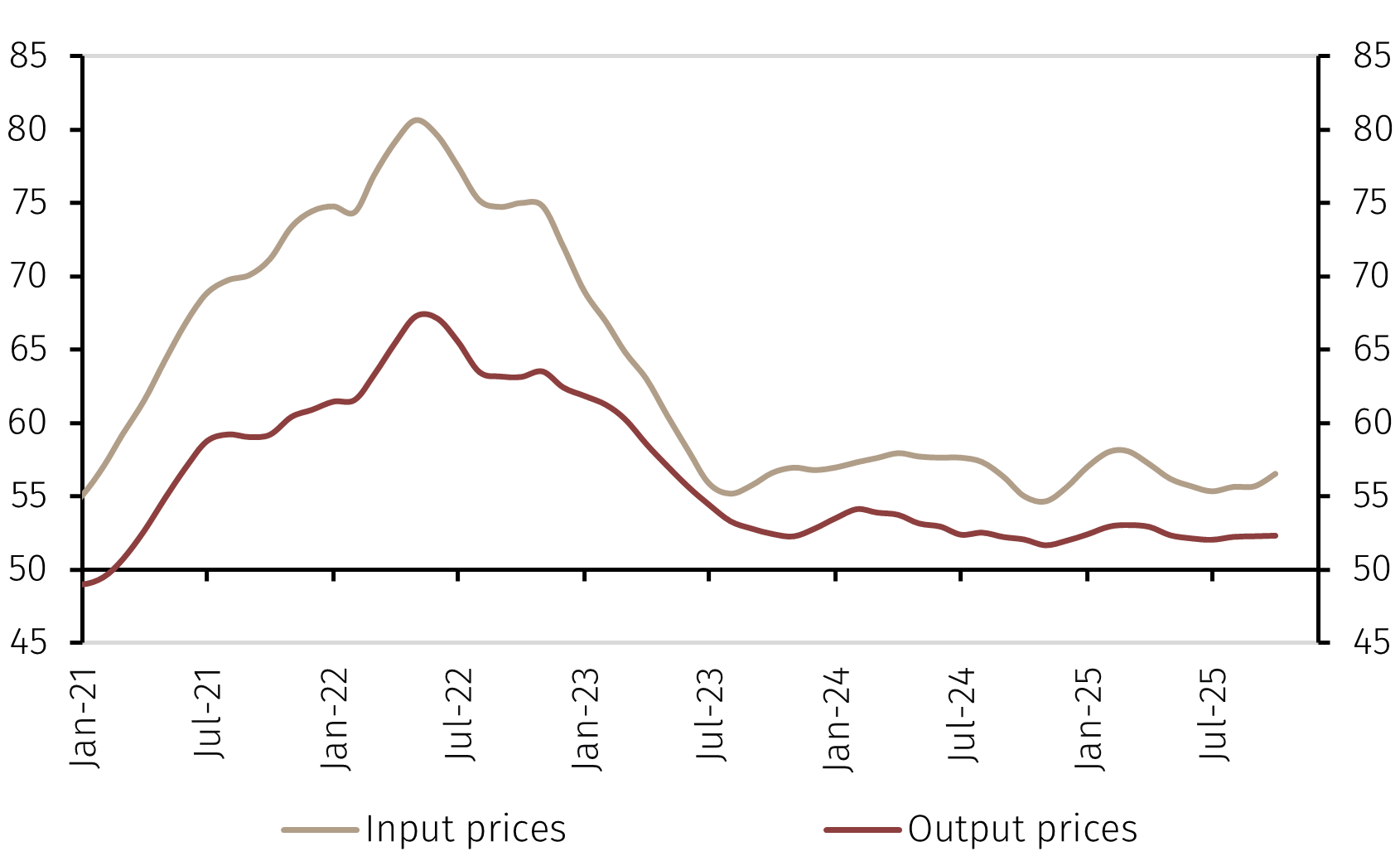
The PMI survey also indicated greater upward pressure on input prices than in recent months in both the manufacturing and services sectors. These pressures have not yet impacted the prices charged by firms, which remain consistent with an inflation rate close to the ECB's 2% target. The risk that inflation will fall below the target for a sustained period has declined.

Chart 3. Eurozone Composite PMI Prices

PMI3.png

Source: LSEG Data & Analytics and EFGAM calculations. Data as of 24 August 2025.

In conclusion, the August PMI data suggest that the moderate growth trend in the eurozone underway since early 2024 will likely continue, supported by encouraging signals from Germany and the lagged effects of the ECB’s prior monetary policy easing. Consumer price pressures remain consistent with an inflation rate in line with the ECB's 2% target. 

A single data release will never determine the ECB Governing Council's monetary policy decisions or substitute for its broad-based analysis of the outlook. However, the August flash PMI data suggest that the ECB has little reason to adjust interest rates at its next meeting on 11 September and that, in the absence of new shocks, it will maintain a wait-and-see approach for some time.
 

Required

Required

Required

Required

Required

Required

Required

Please note you can manage your subscriptions by visiting the Preferences link in the emails you receive from us.

Required