7. An EU revival: Restructuring and reform

Currently reading

7. Energy sovereignty: Power security in a fragile world

Secular Change

7. Energy sovereignty: Power security in a fragile world

Key takeaways

  • The fragility of the global energy supply chain was exposed in 2026, leading to demand for more home-produced electricity, particularly in importer nations.
  • Rising electricity demand increases investment requirements across grids, storage and electrical equipment, broadening the opportunities beyond renewables.
  • Selectivity is essential; access to grids, financing costs, power prices and execution remain important determinants of returns.

Energy infrastructure experienced extreme disruption in 2026. Conflicts in the Middle East and Ukraine have exposed the vulnerability of global supply chains.

These events have highlighted the fragility of the global energy system and its strategic importance for economic and financial stability. The US blockade of the Strait of Hormuz and the threat of disruption to maritime traffic through the Bab-el-Mandeb Strait have underscored how heavily global energy markets depend on a handful of critical chokepoints.

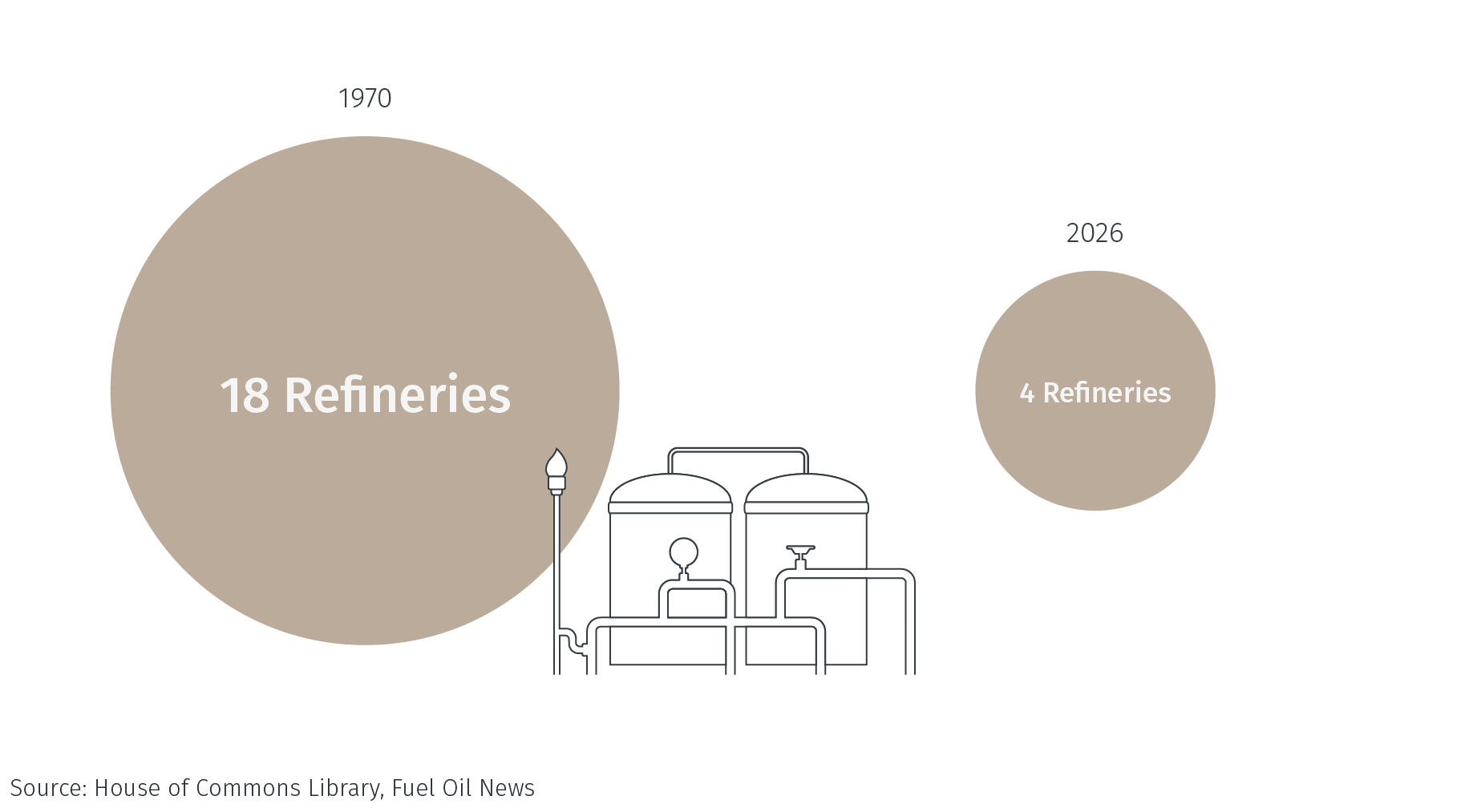
Energy infrastructure is also increasingly exposed to geopolitical risk. Conflicts in Ukraine and the Middle East have disrupted supplies of crude oil, fuels, natural gas and fertilisers. Damage to refineries has amplified the impact of higher energy prices on households and companies. Meanwhile, the number of refineries in Europe had already declined by 20% since 2009 amid the push towards green energy and as ageing refineries reached the end of their lifespans. The effects of high energy prices extend well beyond the energy sector: higher fertiliser costs weigh on agriculture, rising energy and fuel costs squeeze manufacturers, and more expensive jet fuel affects aviation and tourism (Figure 17).

Energy security and sovereignty come to the fore 
Disruption to the global energy supply chain raises fundamental questions about the current energy sector set-up. Energy security and sovereignty are now at the centre of the political debate, with sovereignty referring to a country’s ability to meet its energy needs from its own resources. Fossil fuel exporters must invest in new infrastructure to guarantee they can fulfil client demand without disruption at chokepoints. 

Energy importing parts of the world such as Europe must reassess their procurement strategies. In the short term, the solution could involve greater diversification of energy supply chains. In the longer term, it requires a structural reduction in dependence on foreign supplies.

This does not mean building more refineries in Europe; instead, it means reducing demand for diesel. This strengthens the case for investment in renewable sources of energy and the increased electrification of the economy. The need for energy sovereignty has become all the more urgent because of the acceleration in European investment in data centres, as AI adoption increases rapidly. For Europe this may well represent an existential challenge.

The need for energy sovereignty has become all the more urgent because of the acceleration in European investment in data centres, as AI adoption increases rapidly. For Europe this may well represent an existential challenge.

European nations cannot hope for strong economies and geopolitical influence if they do not own their power and data. Ensuring reliable access to energy at sustainable prices is therefore becoming a strategic priority – not only for economic growth, but also for energy security and sovereignty. 

As a result, the disruptions of 2026 set the stage for lasting, broad-based structural investment that will reshape the global power system over the coming years. Europe’s goal of energy independence will be central in that transformation and will depend heavily on investment in the electrification of the economy, creating a structural investment opportunity across the entire power system.

Powering the next wave of electricity demand
Electricity demand is entering a new phase. After roughly 15 years of stagnation in advanced economies, consumption is rising again as transport, industry and buildings become increasingly electrified (Figure 18). Data centres add a particularly power-intensive source of demand, especially in the US. The International Energy Agency (IEA) expects global electricity-demand growth to accelerate from 3% in 2025 to 3.6% in 2026 and 3.8% in 2027.

Energy security is another important driver of electrification. Recent disruptions have highlighted the vulnerability of economies dependent on imported fossil fuels, strengthening the strategic case for domestic power generation. This is particularly relevant for Europe, where reducing exposure to imported energy remains a policy priority. Solar and wind are increasingly competitive and can provide a good alternative to imported fuel.

We therefore expect a multi-year investment cycle across the electricity system, extending well beyond renewable generation.

Figure 19. UK major operating oil refineries

02_EFG_Outlook_2027_EN_Charts_Website__Figure19_Source.png

Electricity demand is creating a structural investment requirement
The broadest driver is electrification. Electric vehicles, heat pumps, cooling and industrial processes are steadily shifting energy consumption towards electricity. Buildings are expected to account for almost half of the additional global electricity demand through 2030, while transport and industry will also contribute significantly.

Data centres are an important but geographically concentrated source of demand. Globally, they account for less than 10% of expected electricity-demand growth through 2030, but around half of the increase in US consumption. In Europe, demand is being driven by broader electrification, particularly in transport and buildings, alongside a recovery in industrial electricity demand.

The key point is that electrification is bigger than an AI story. Rising electricity consumption is creating a sustained need for investment in generation and infrastructure.

The opportunity extends beyond generation
Renewables are well placed to meet much of the additional demand, but generating electricity is only part of the challenge. Power must also be connected and delivered where and when it is needed.

More than 2,500 gigawatts of renewable generation, storage and large electricity loads are waiting for grid connections globally. In Europe, permitting and network constraints could slow the deployment of otherwise competitive renewable capacity.

“ Rising electricity consumption is creating a sustained need for investment in generation and infrastructure. ”

As renewables take a larger share of the power mix, storage and other flexible solutions will also become more important. We therefore expect the investment cycle to broaden towards grids, transformers, cables, switchgear and batteries. The IEA estimates around $665 billion of investment in renewable generation in 2026, almost $550 billion in grids and more than $100 billion in battery storage.

Where demand grows and where value is created will differ
Regions able to provide reliable and competitively priced electricity should be better placed to attract electricity-intensive activities. For Europe, affordable and secure power could therefore become an increasingly important source of competitiveness.

Where electricity is consumed, however, is not necessarily where investment value is captured. Grid expansion in the US, for example, can generate demand for equipment manufactured by European companies. Investors should therefore distinguish between where electricity demand grows, where infrastructure investment takes place and where suppliers generate their earnings.

Our view for 2027

Following the global energy supply shocks of 2026, energy-importing nations are likely to accelerate investment in domestic electricity generation to strengthen energy security, while demand continues to grow, not least from data centres. Investment opportunities extend beyond renewable developers to utilities, electrical-equipment manufacturers, storage providers and other businesses supporting the expansion of power systems.

However, weaker-than-expected data-centre demand, grid and permitting delays, higher financing costs and growing manufacturing capacity could all weigh on returns. Selectivity will be key, with grid access, power prices, financing costs and execution remaining critical determinants of success. 

For you as an investor, the message from Theme 7 is to look beyond pure generation and build exposure across grids, storage and electrical equipment, differentiating carefully by geography and remaining selective within renewables. The points below translate this into concrete portfolio actions for the year ahead.

Action for investors:

  • Look beyond generation. Electricity demand is increasing investment requirements across grids, storage and electrical equipment, broadening opportunity set beyond renewables.
  • Differentiate by geography. Where electricity demand grows, where infrastructure is built and where equipment is manufactured are not necessarily the same.
  • Remain selective within renewable energy. Grid access, financing costs, power prices and execution remain important determinants of returns.

Obligatorisch

Obligatorisch

Obligatorisch

Obligatorisch

Obligatorisch

Obligatorisch

Obligatorisch

Please note you can manage your subscriptions by visiting the Preferences link in the emails you receive from us.

Obligatorisch