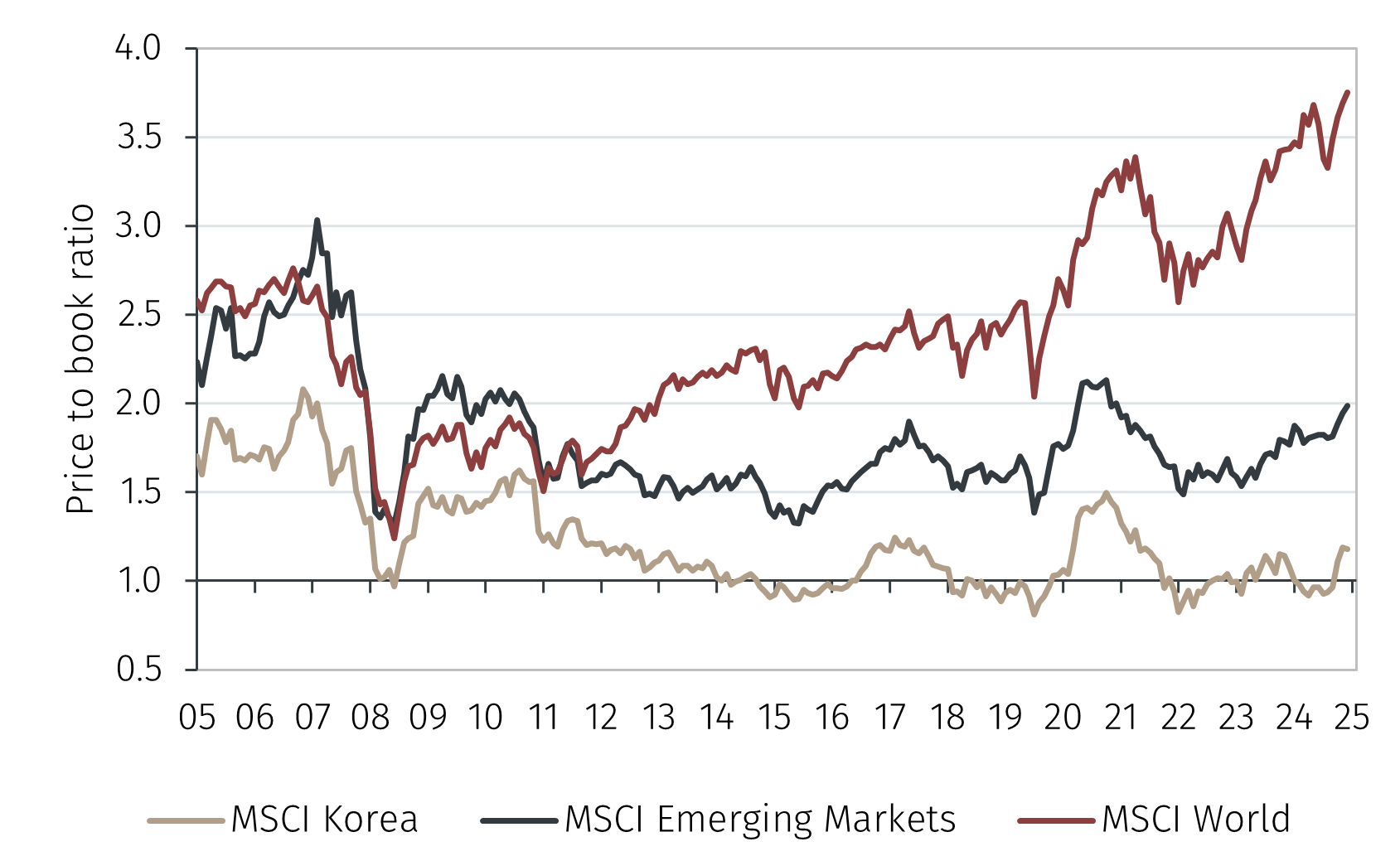
The ‘Corporate Value-Up Plan’ aims to elevate capital efficiency, strengthen payout practices, improve governance and increase protection for minority stakeholders.4 The program is voluntary and incentivises firms to participate by offering tax incentives for companies with outstanding disclosure practices, though there is a lack of detail on specifics.5
The voluntary nature of the program is one of its major potential drawbacks. Under the previous President, Yoon Suk Yeol, only fourteen percent of listed South Korean companies had signed up to the scheme.6 Data suggests that rate is yet to increase significantly under the premiership of Lee Jae-myung.7
However, the passing of new legislation in July marks the most significant step in the program to date. Company director’s fiduciary duties have traditionally only been to the company in Korea, meaning the interest of all shareholders has not been required to be legally safeguarded.8 Under the new legislation, company directors are obligated to act in the best interest of all shareholders.9
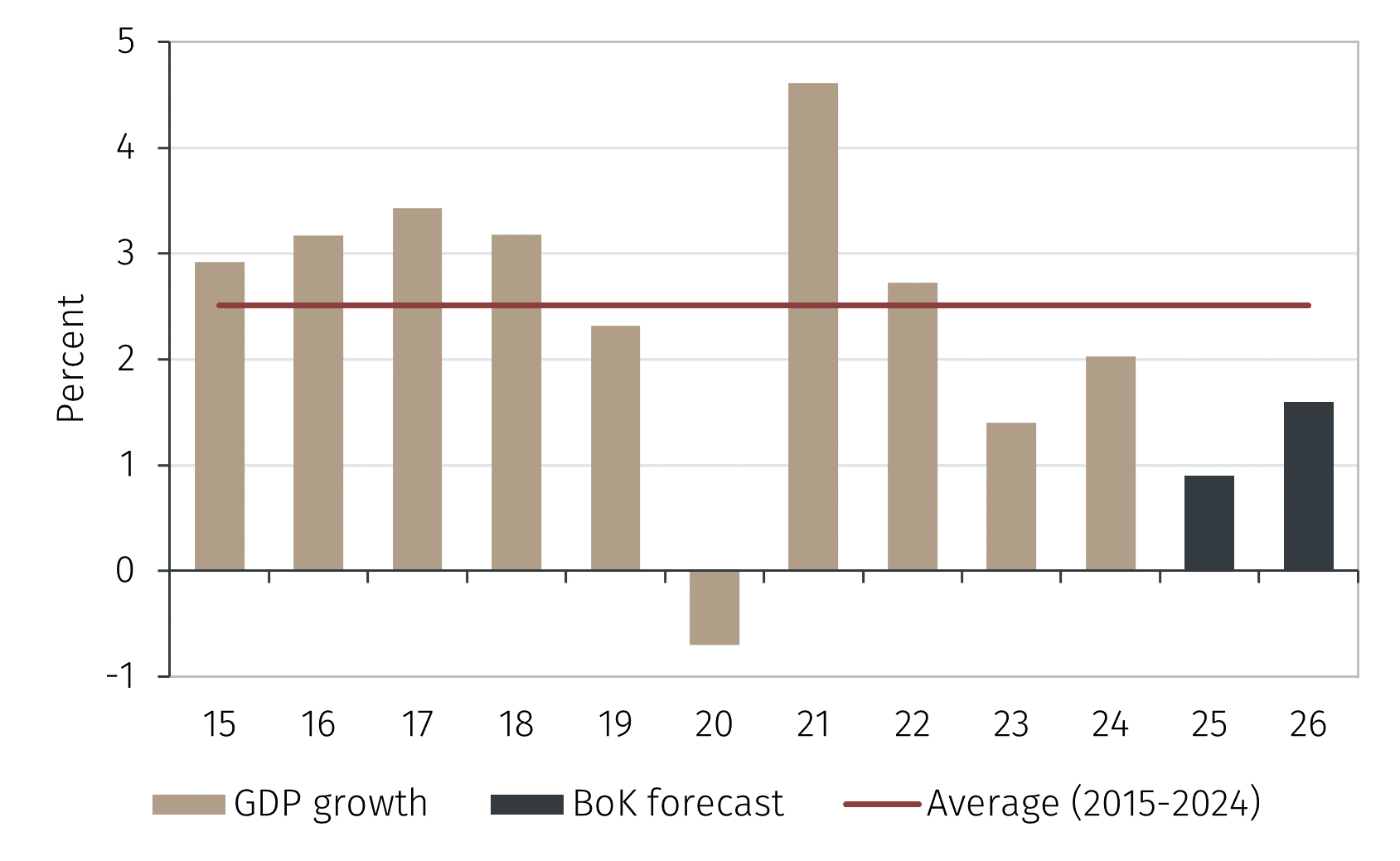
While the law change is potentially significant and justifies market positivity, headwinds remain and should be considered when assessing the potential impact of the ‘Corporate Value-Up Plan’. Among them is the potential for the program’s incentivisation of strengthened payout practices to lead to lower capital investment, which could lower Korea’s GDP growth.10
Summary
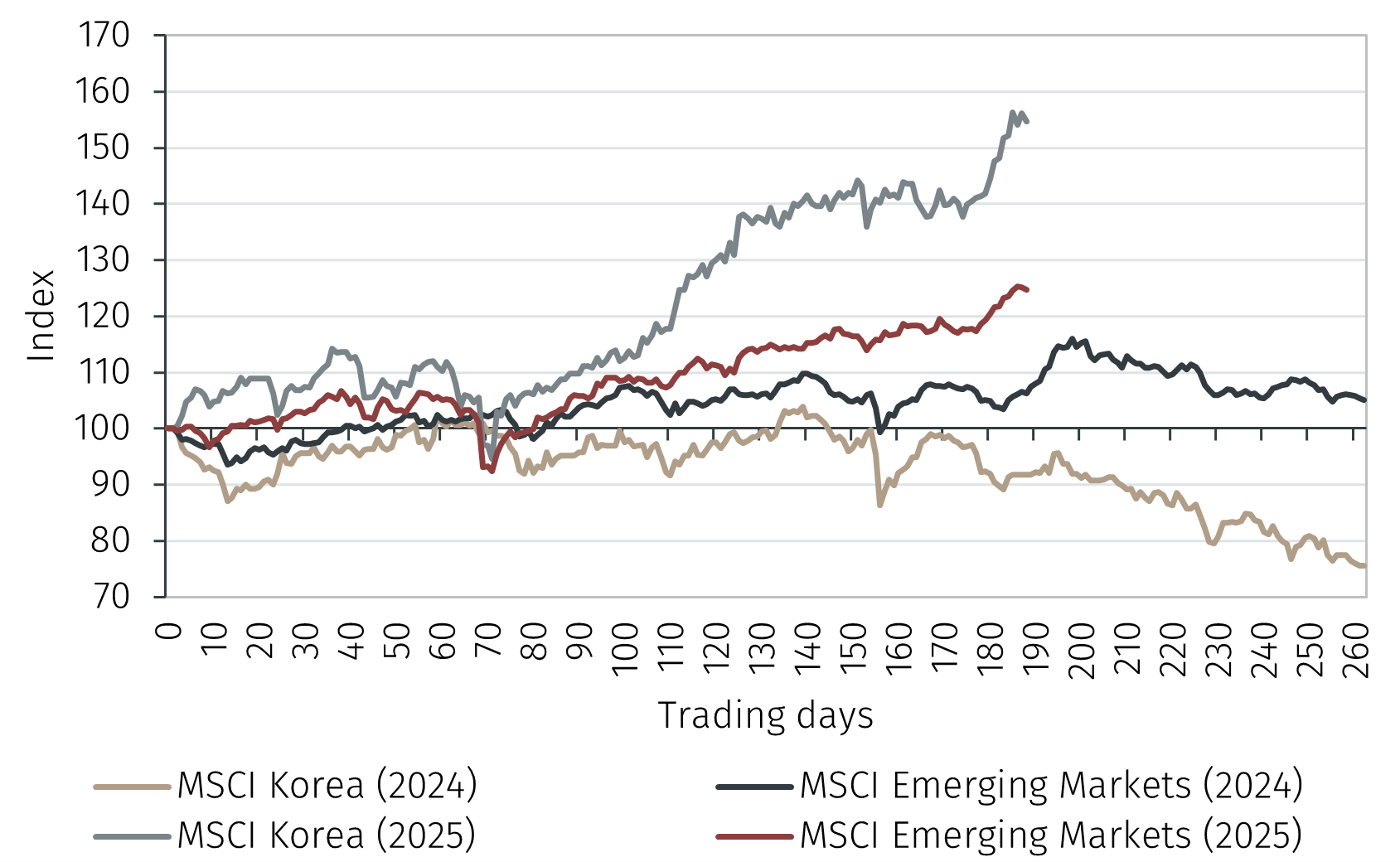
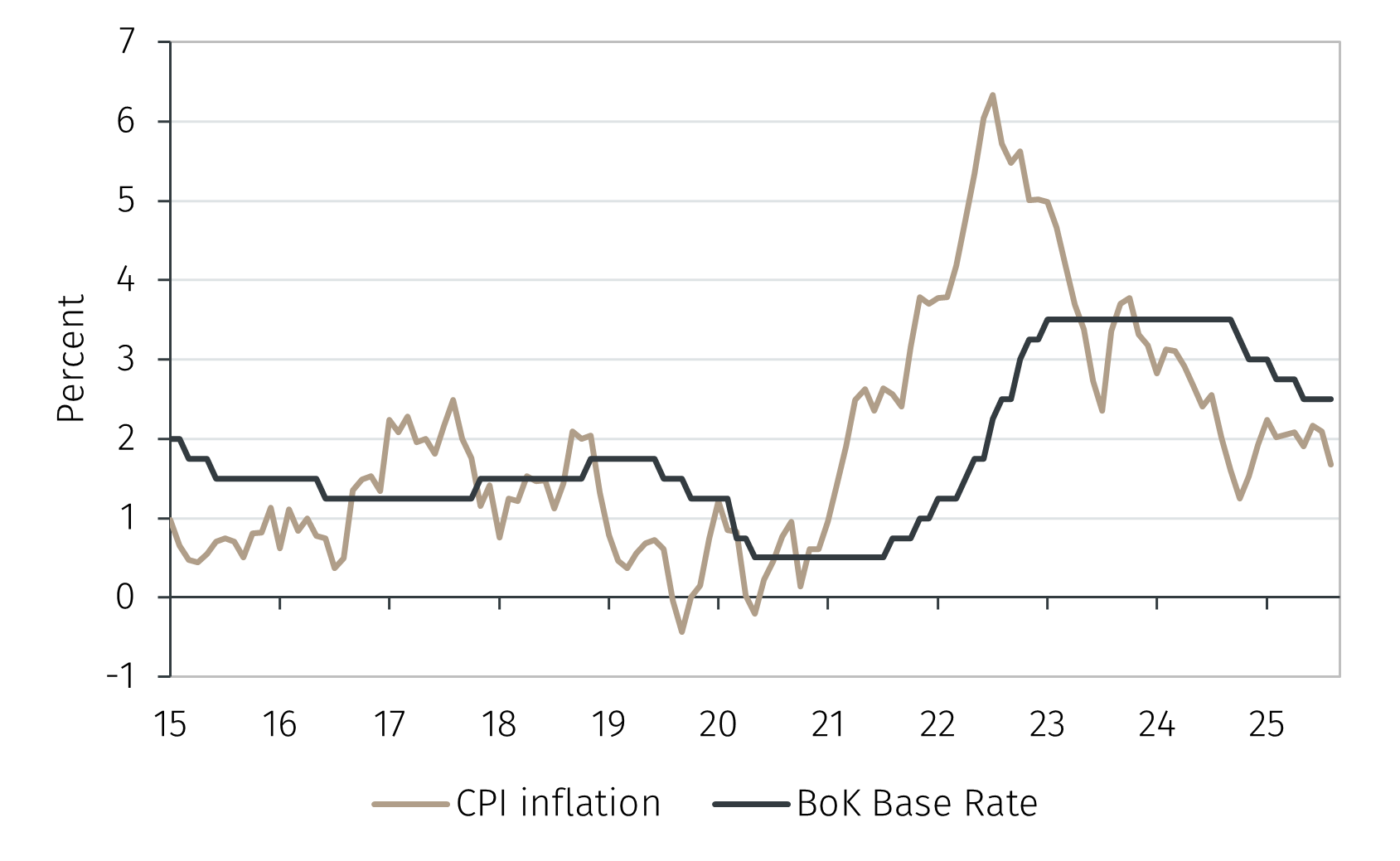
In summary, the outlook in Korea has improved since the end of last year. GDP growth has rebounded from low levels, supported by a more accommodative monetary policy, and political stability has returned. The prioritisation of corporate reform by Lee Jae-myung’s government and changes to fiduciary duty laws are positive. However, excessive exuberance should be avoided, primarily due to the limited participation in the 'Corporate Value-Up Plan' thus far. Whether the 'Corporate Value-Up Program' can narrow the "Korea discount" in the long run remains to be seen.