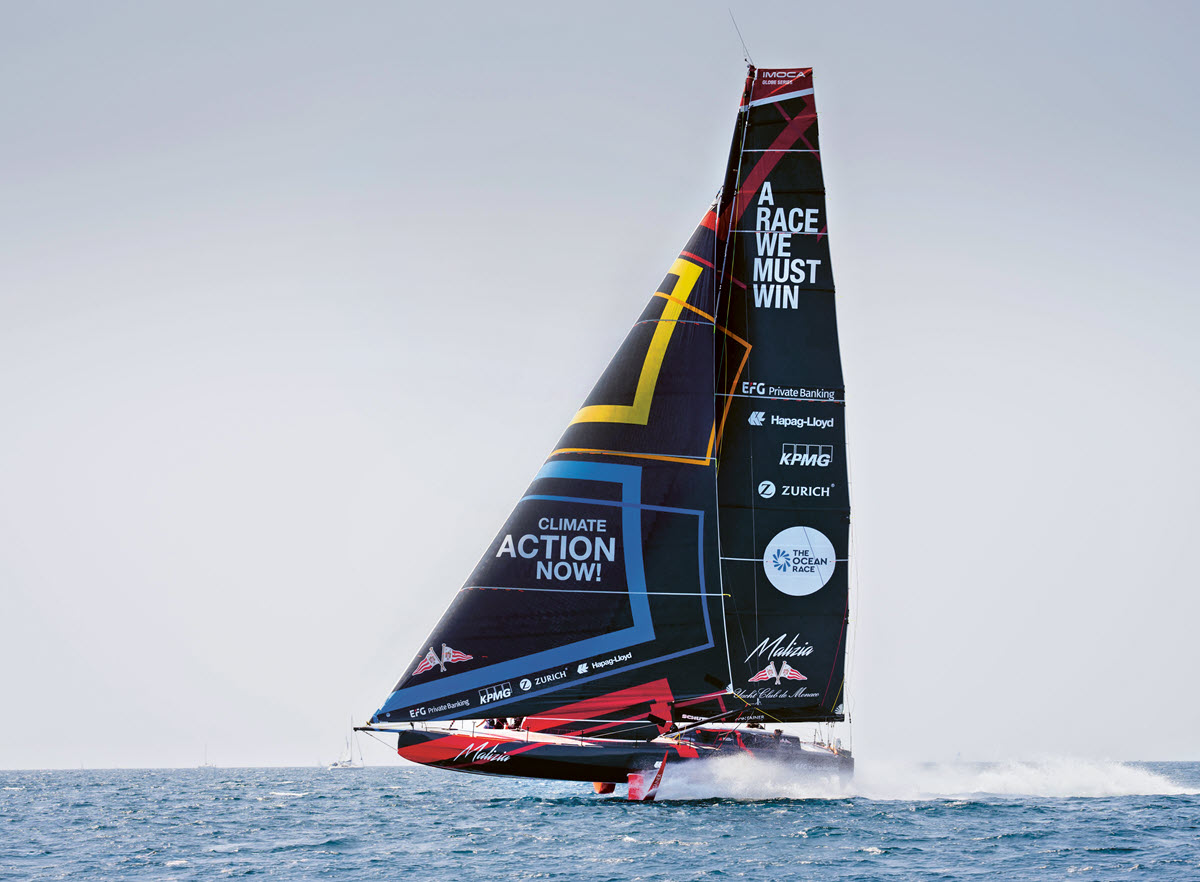
Offshore sailing is a sport where marginal gains can decide victory. For skipper Boris Herrmann and his crew, staying competitive demands a boat that is faster, more adaptable and optimised for every condition they may encounter. Modern IMOCA racing is as much about technology as it is about sailing, and Malizia 4’s design is the culmination of years of data, insight and race experience.
The boat harnesses all the latest advancements the world of sailing has to offer, yet technology alone cannot win a race. The sailors must be intuitive and responsive, and the boat becomes a vital extension of the team itself. It is this relationship between human and machine that makes offshore racing so compelling.
Beneath the deck lies a complex technological ecosystem: Autopilots, sensors, radars, AI and energy systems. Malizia 4 has been built from the ground up in close collaboration with the sailors, translating human intuition into onboard intelligence. At sea, the crew must analyse a constant stream of data, interpret the boat’s behaviour and make critical decisions in real time. Technology sets the parameters but it is the sailor who makes the call.
Every system must be fully functional and thoroughly understood by those who depend on it. Bringing these technologically advanced systems together is a fine balancing act, with each component designed to withstand the extreme demands of offshore racing. Behind the scenes, sailors, engineers, partners and designers have worked in close collaboration to create a boat built for maximum performance and safety.
Malizia 4 is more than a racing machine; it is an expression of the team’s identity, values and mission. Their defining message, “A Race We Must Win – Climate Action Now!”, reflects a commitment to raising awareness of climate change and the urgent need to protect the ocean.
Malizia 4 made her competitive debut in The Ocean Race Atlantic this September, ahead of two of the toughest challenges in offshore sailing, The Ocean Race in 2027 and the Vendée Globe in 2028.