Energy security and sovereignty come to the fore
Disruption to the global energy supply chain raises fundamental questions about the current energy sector set-up. Energy security and sovereignty are now at the centre of the political debate, with sovereignty referring to a country’s ability to meet its energy needs from its own resources. Fossil fuel exporters must invest in new infrastructure to guarantee they can fulfil client demand without disruption at chokepoints.
Energy importing parts of the world such as Europe must reassess their procurement strategies. In the short term, the solution could involve greater diversification of energy supply chains. In the longer term, it requires a structural reduction in dependence on foreign supplies.
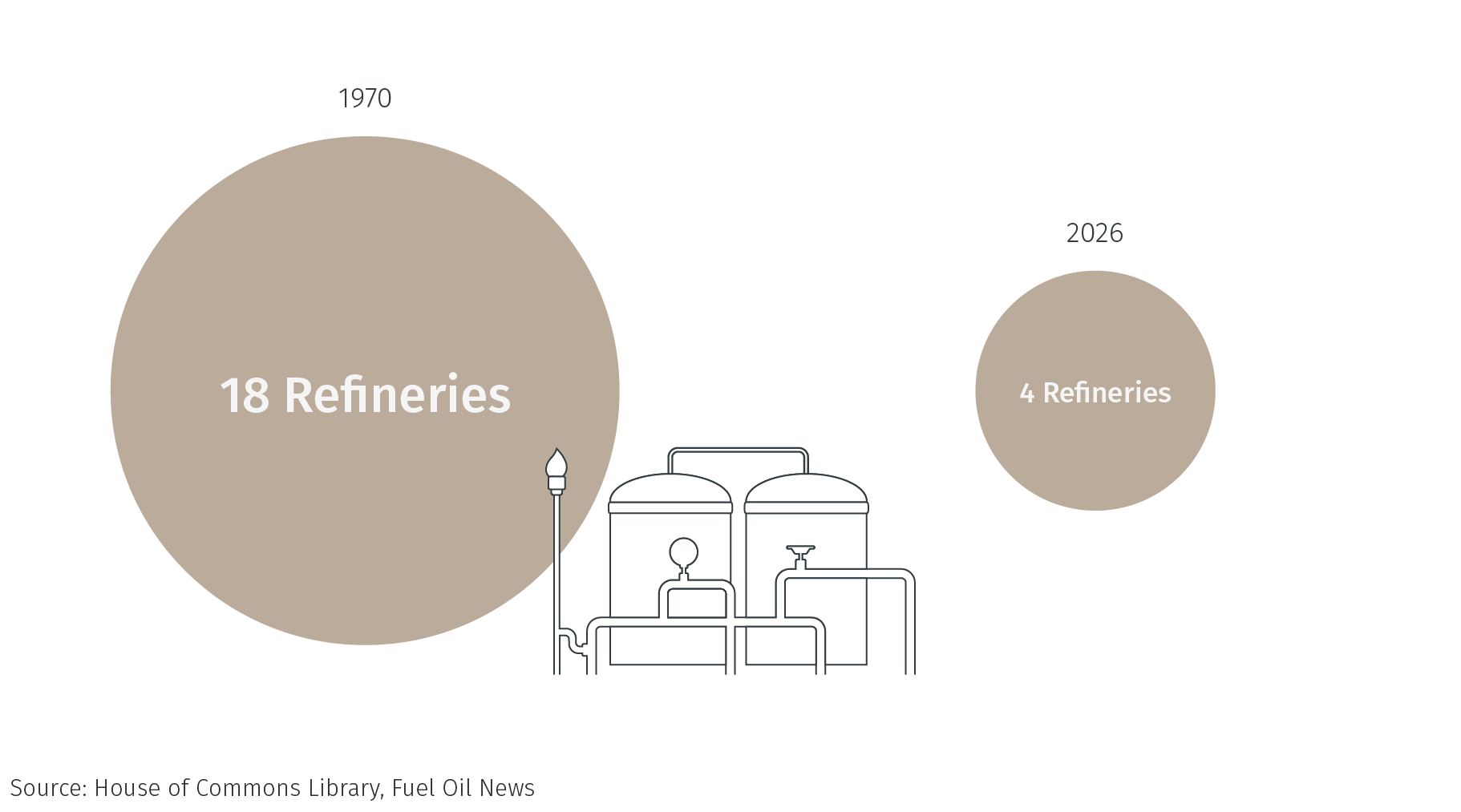
This does not mean building more refineries in Europe; instead, it means reducing demand for diesel. This strengthens the case for investment in renewable sources of energy and the increased electrification of the economy. The need for energy sovereignty has become all the more urgent because of the acceleration in European investment in data centres, as AI adoption increases rapidly. For Europe this may well represent an existential challenge.
The need for energy sovereignty has become all the more urgent because of the acceleration in European investment in data centres, as AI adoption increases rapidly. For Europe this may well represent an existential challenge.
European nations cannot hope for strong economies and geopolitical influence if they do not own their power and data. Ensuring reliable access to energy at sustainable prices is therefore becoming a strategic priority – not only for economic growth, but also for energy security and sovereignty.
As a result, the disruptions of 2026 set the stage for lasting, broad-based structural investment that will reshape the global power system over the coming years. Europe’s goal of energy independence will be central in that transformation and will depend heavily on investment in the electrification of the economy, creating a structural investment opportunity across the entire power system.
Powering the next wave of electricity demand
Electricity demand is entering a new phase. After roughly 15 years of stagnation in advanced economies, consumption is rising again as transport, industry and buildings become increasingly electrified (Figure 18). Data centres add a particularly power-intensive source of demand, especially in the US. The International Energy Agency (IEA) expects global electricity-demand growth to accelerate from 3% in 2025 to 3.6% in 2026 and 3.8% in 2027.