
No need for negative SNB rates

All Insights

Currently reading

A brighter outlook for Switzerland as US looks to lower tariffs

Investment Insights • Macro

2 min read

A brighter outlook for Switzerland as US looks to lower tariffs

After months of rising tensions, the US declaration of intent to reduce tariffs on Swiss goods is a welcome development. In this Macro Flash Note, senior economist and strategist GianLuigi Mandruzzato looks at the new US trade policies toward Switzerland and their impact on its economy.

Switzerland is a small open economy that is highly sensitive to foreign demand, meaning that the Trump administration’s recent tariff announcement has important ramifications for the country. Since 2 April, so-called Liberation Day, global trade developments have been worse than were expected at the beginning of the year. The outlook for Switzerland deteriorated, especially after the announcement on 1 August that Swiss goods shipped into the US would be subject to a 39% tariff rate.

Tariff impact on Swiss exports
That tariff rate is much higher than applied to goods from the UK (10%), the European Union and Japan (15%) putting Swiss companies at a clear disadvantage. However, pharmaceutical goods and gold are exempt from tariffs, mitigating the shock to the Swiss economy in aggregate. Indeed, in 2024, pharmaceuticals and gold accounted for just under 70% of total US imports from Switzerland.1 The value of goods exports from the sectors affected by the new tariffs represent just over 4% of total Swiss exports, or less than 2.5% of annual GDP.2
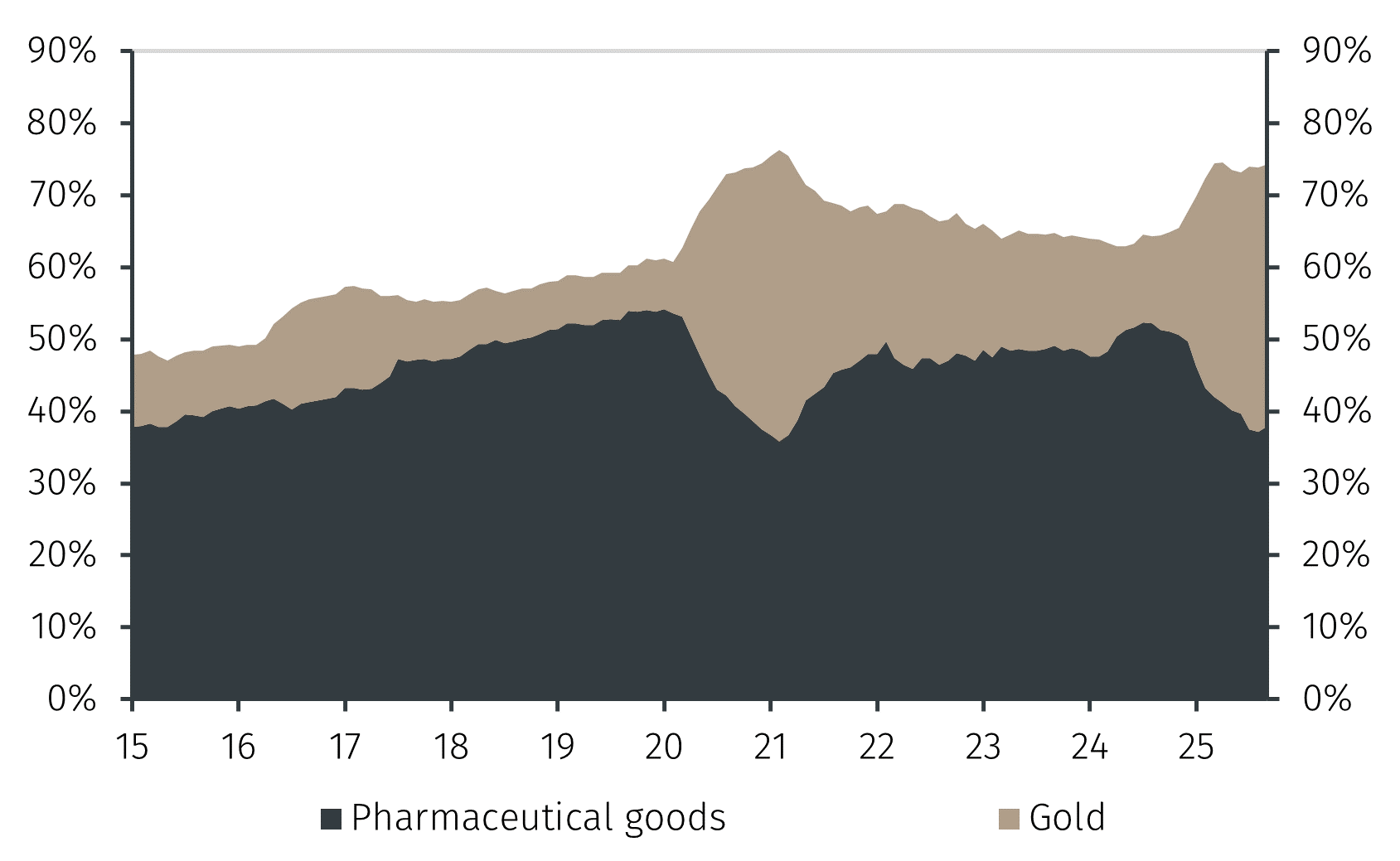
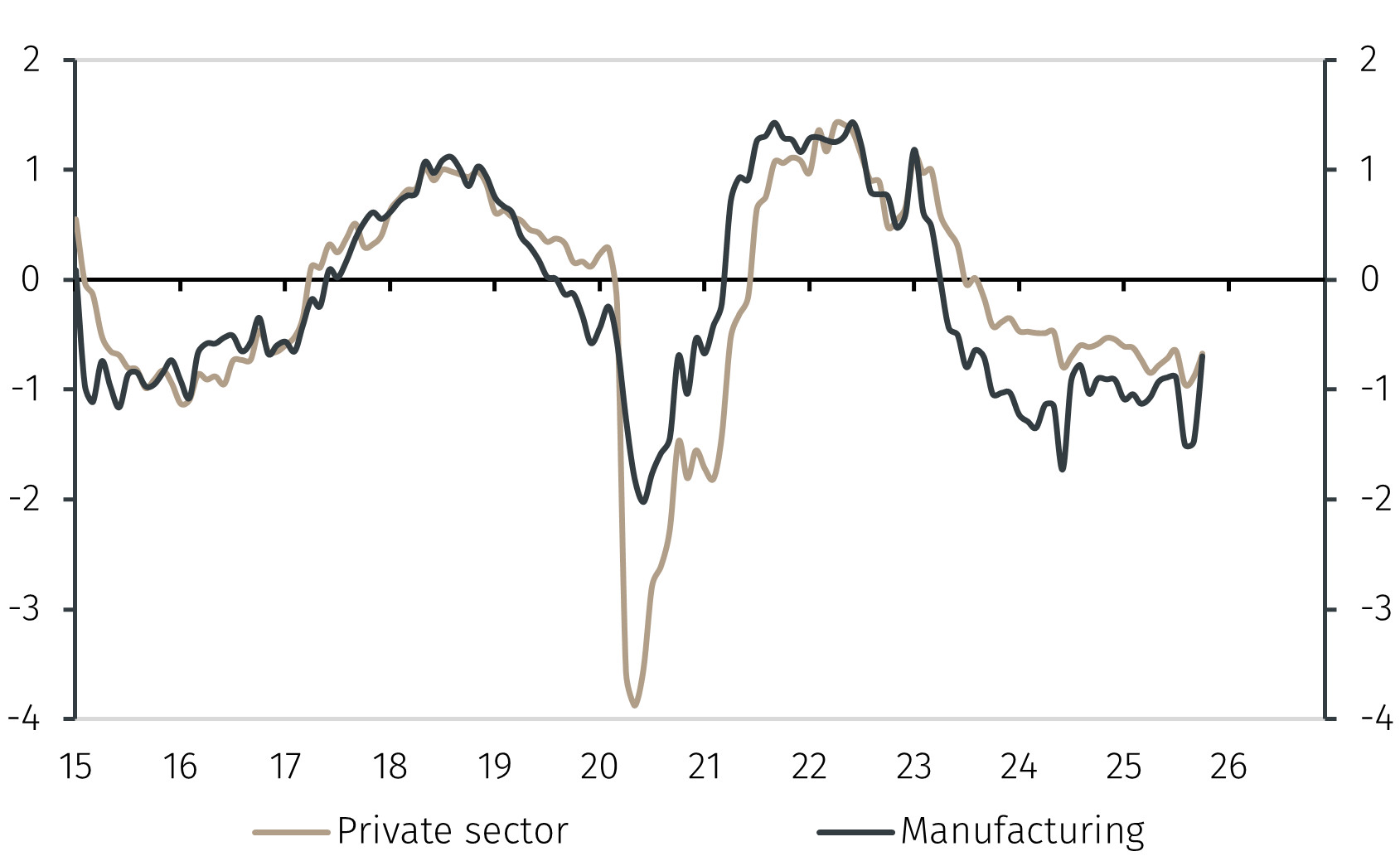
Chart 1. Share of Swiss exports to the US (% of total)

Swiss1.png

Source: Global Trade Tracker, LSEG Data & Analytics, and EFGAM calculations. Data as of 23 November 2025

At first glance, therefore, the impact of the shock on Swiss GDP growth should be contained. For example, in September, the Swiss National Bank reduced its 2026 GDP growth forecast by less than half a percentage point to 1%, also reflecting the appreciation of the Swiss franc.3 While unwelcome, the 39% tariff rate shock was far from catastrophic for the Swiss economy. A case in point is that in October Swiss business confidence had recovered to its pre-August level.

Chart 2. Swiss business sentiment

Swiss2.png

Source: KOF and EFGAM calculations. Data as of 23 November 2025

It seems likely that sentiment improved further after the US and Switzerland signed a memorandum of understanding (MoU) on November 14, under which the US will reduce tariffs to 15%, bringing them in line with those applied to European Union goods.4

Signs of improvement, but uncertainty far from over
Despite improving sentiment, uncertainty remains high. First, the longer it takes to finalise the commitments under the MoU with the US, the greater the impact on activity in the sectors subject to US tariffs. Furthermore, uncertainty about the final tariff rate could delay investments and hiring in the affected sectors, including machinery, precision mechanics and chemicals, spilling over to other sectors of the Swiss economy and dampening domestic demand.

Finally, it cannot be ruled out that the pharmaceutical sector will also be subject to US tariffs in the future. Even if they were limited to 15%, the adverse impact on the Swiss economy would increase significantly.

Conclusion
In conclusion, the 39% US tariffs on goods imports from Switzerland was the highest applied to any Western country. Tariff exemptions on pharmaceuticals and gold make the shock manageable at the aggregate level, although it remains severe for the sectors directly affected. The recent Memorandum of Understanding to reduce US tariffs to 15%, in line with those applied to European Union goods, is a welcome development and is expected to be finalised shortly.

Even in a context of continued high uncertainty, this would improve the outlook for Swiss GDP growth, perhaps adding 0.2% to the latest SNB’s projection and benefitting small and medium sized companies the most. In turn, this would reduce the risk that the Swiss National Bank will further cut interest rates into negative territory. Finally, an upgraded growth outlook should also support the Swiss franc exchange rate.
 

1 2024 is taken as the reference rather than the latest available data because export flows of gold and pharmaceuticals have already been significantly impacted by the tariffs in 2025.
2 The most affected sectors are watchmakers, machinery, precision mechanics, chemicals, and food; see SNB President Schlegel speech “Situation économique et politique monétaire”.
3 See SNB’s Monetary policy assessment of 25 September 2025.
4 In exchange for tariff reductions and the easing of non-tariff barriers to imports of certain US goods into Switzerland and increased direct investment by Swiss companies in the US. See Declaration of intent between the USA and Switzerland on US additional tariffs.

Required

Required

Required

Required

Required

Required

Required

Please note you can manage your subscriptions by visiting the Preferences link in the emails you receive from us.

Required