
What Pythagoras’ theorem can teach us about the Fed

All Insights

Currently reading

Chairman Powell signals September cut likely, if the data allow

Investment Insights • Macro

2 min read

Chairman Powell signals September cut likely, if the data allow

Federal Reserve Chair Jerome Powell spoke at the Kansas City Fed’s annual Jackson Hole symposium, indicating that a rate cut in September is likely, provided the data over the coming weeks do not surprise. With risks finely balanced, he avoided pre-empting the FOMC’s decision, but his remarks are the clearest indication yet of the Committee’s likely course. In this Macro Flash Note, EFG Chief Economist Stefan Gerlach comments on Powell’s message and its implications for monetary policy.

Federal Reserve Chair Jerome Powell spoke on Friday 22 August at the Federal Reserve Bank of Kansas City’s annual Jackson Hole symposium.1 Markets were eager for any indication of a rate cut ahead of the Federal Open Market Committee (FOMC) meeting on 17 September. While Powell does not set policy outside of formal meetings, his remarks are usually the best guide to the Committee’s thinking. He stopped short of making any commitment but suggested that the Fed may be preparing to ease policy in September, saying that “the shifting balance of risks may warrant adjusting our policy stance.”

A more definitive signal would have constrained the FOMC. The arguments for and against a rate cut remain finely balanced, and labour market or inflation data over the next few weeks will affect the decision. The next Personal Income and Outlays release is on 29 August, the JOLTS survey is due on 03 September, the Employment Situation report on 05 September, the producer price index report on 10 September, and the consumer price index (CPI) report on 11 September. With the FOMC meeting scheduled for 17 September, Powell left scope for those releases to shape the final decision.

Powell’s assessment of the economy was measured. Inflation has fallen substantially from its post-pandemic highs but is not yet back at the 2% target.2 Since August 2023, headline CPI has declined from 3.7% to 2.7%, while core CPI has fallen from 4.4% to 3.1%, but both remain above target. Tariffs appear to be exerting some upward pressure on prices, though their full impact is highly uncertain and dependent on evolving trade policy.
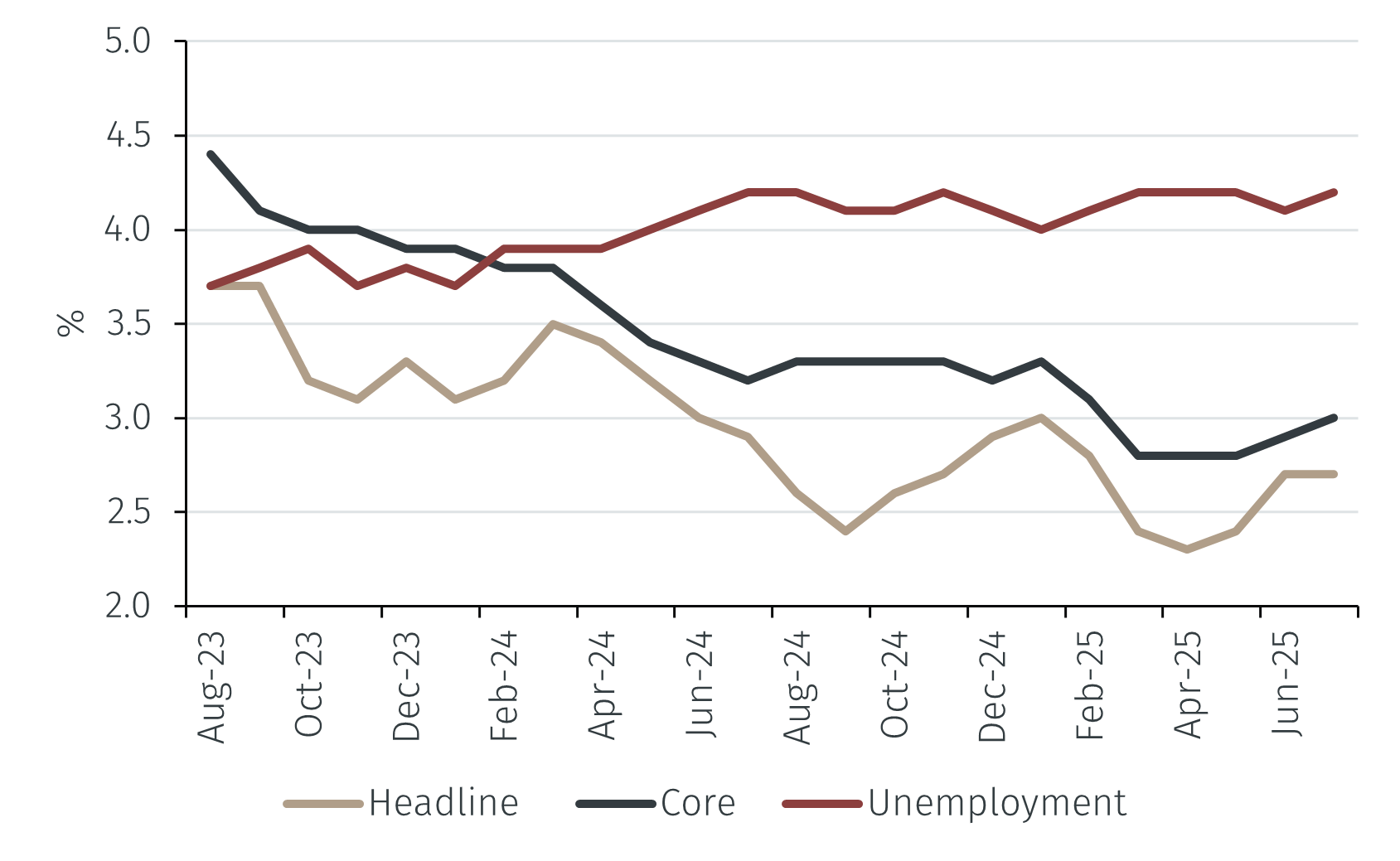
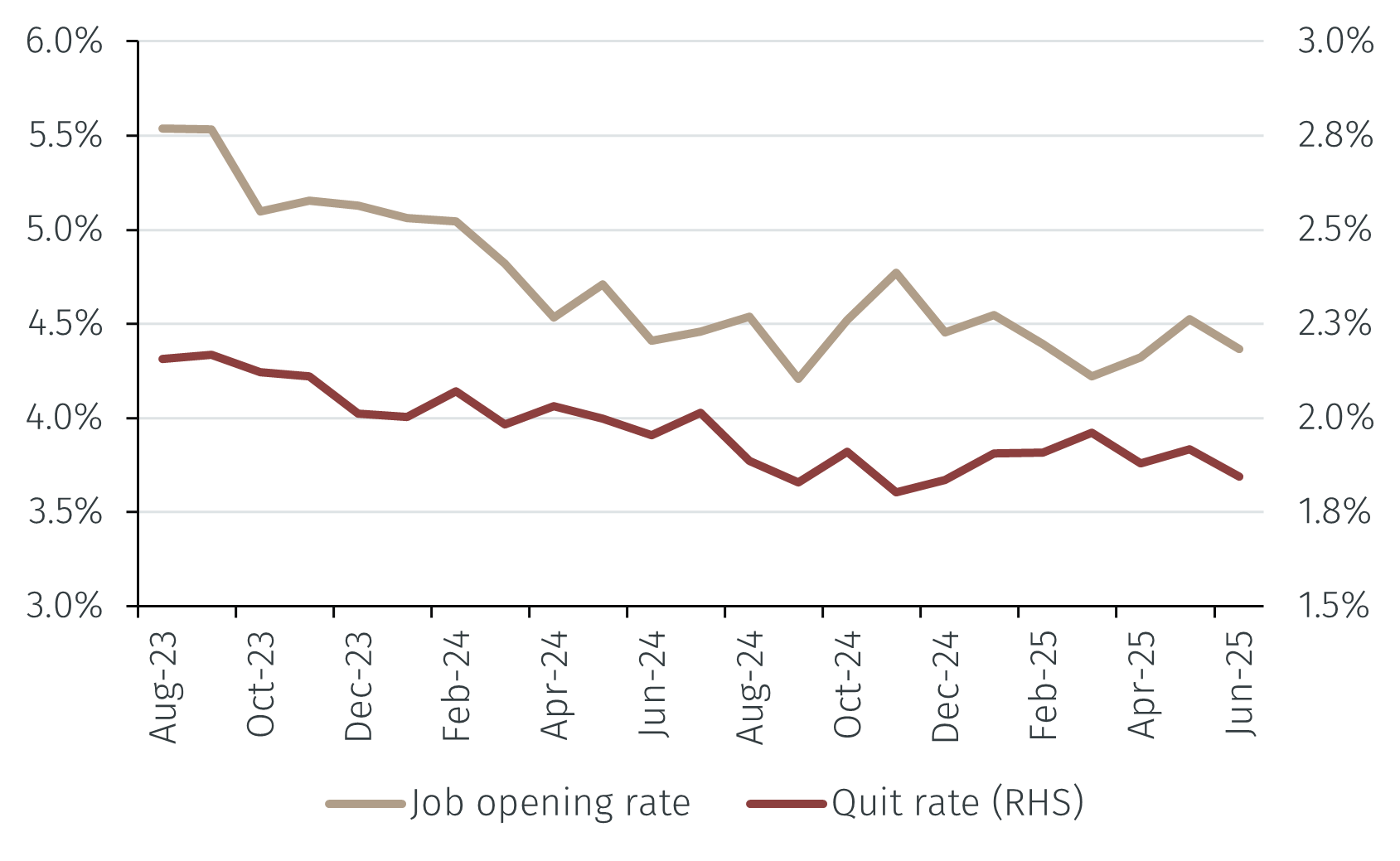
Figure 1. CPI inflation and unemployment rate

JH1.png

Source: BLS and FRED. Data as of 24 August.

The labour market, meanwhile, remains resilient but is showing signs of cooling. Job growth has slowed, the unemployment rate has edged up from 3.7% in August 2023 to 4.2% in July, and leading indicators such as quits and job openings point to softer demand for workers. At the same time, reduced immigration has slowed labour supply. Powell described the labour market as “in balance,” though more through weaker demand and supply than through renewed strength.

Figure 2. Job openings and quits

JH2.png

Source: FRED. Data as of 24 August.

The combination of upside risks to inflation and downside risks to the labour market leaves the Fed in a difficult position under its dual mandate. Policy is already restrictive and closer to neutral than a year ago, but Powell acknowledged that the balance of risks may warrant easier policy.

In practice, this points to a September rate cut as possible, perhaps even likely, but not guaranteed. Some commentators have already declared the move a “done deal,” but Powell made clear that the decision will depend on the incoming data and the collective judgement of the FOMC. If the upcoming labour market or inflation reports surprise materially, the Committee will need to take that into account. Powell’s message therefore implicitly assumes no major data surprises.
 

Obligatoire

Obligatoire

Obligatoire

Obligatoire

Obligatoire

Obligatoire

Obligatoire

Please note you can manage your subscriptions by visiting the Preferences link in the emails you receive from us.

Obligatoire